
A number of lawyers have pushed back on the Integrated Bar of the Philippines’ (IBP) recent statement that declared the Senate’s June 3, 2026 session “lawful and valid,” arguing that the constitutional issue remains open to debate.
In its statement released on June 4, the IBP – citing the Supreme Court’s ruling in Avelino v. Cuenco and invoking the “Avelino doctrine” – maintained that the 12 senators present on June 3 were sufficient to constitute a quorum and transact official business, adding that “all acts, resolutions and decisions made by the Senate during its session of June 3, 2026, are presumed to be official acts of the Philippine Senate.”
A number of lawyers, however, have publicly disagreed with the interpretation.
According to Atty. Anthony R. Escasina, it is “not a conclusive and binding precedent” and that the Constitution is clear that “a majority of each House shall constitute a quorum to do business.”
He added that the Senate’s quorum should generally be reckoned from its full membership unless there are vacancies or members who have been legally removed or are otherwise incapable of holding office.
Atty. John Rey Codilla, writing as Codilla Law, stressed that the IBP statement should not automatically be viewed as the position of the entire legal profession.
“Because this matter was not subjected to prior consultation with the general membership, the statement properly reflects the perspective of the Board rather than the unified stance of the organization’s constituents. Consequently, it does not necessarily represent my personal views or those of numerous other members of the Bar,” he said in a statement.
According to many legal experts, the circumstances in the 1949 case were materially different from the events that transpired in the Senate this year, making it debatable whether the ruling should automatically govern the June 3 proceedings.
Some lawyers such as Atty. Greg Pallugna further maintained that the IBP statement itself acknowledged the existence of competing interpretations when it discussed the disputed nature of the quorum issue, arguing that constitutional questions of this magnitude cannot be considered conclusively settled merely by reference to a single precedent.
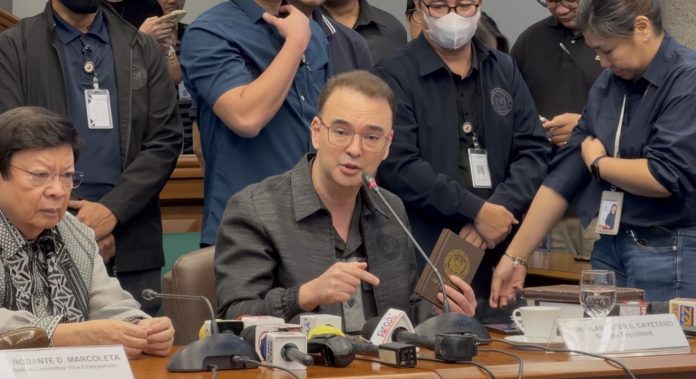
Senate President Alan Peter Cayetano, himself a lawyer, likewise defended the legality of the June 3 proceedings, saying the Senate’s actions were guided by established rules and principles.
“Alam natin kung ano ang tama at mali. Three books: The Rules of the Senate, the Philippine Constitution, the Bible. Do we follow power or do we follow these three books? I’m confident God is in control,” he said.
While the IBP’s position has been welcomed by those who participated in the June 3 proceedings, lawyers who disagree with the statement stressed that constitutional interpretation does not end with one legal opinion, even if it comes from the country’s largest organization of lawyers.
SPunch Photo