
For years, Filipinos have endured a politics that too often rewarded noise over nuance, performance over process, and outrage over outcomes.
Public service became theater. Governance became spectacle. The halls of power increasingly resembled a perpetual campaign stage—where viral sound bites mattered more than institutional stability, and political “clap-backs” were mistaken for leadership.
But this week, something shifted in the Senate.
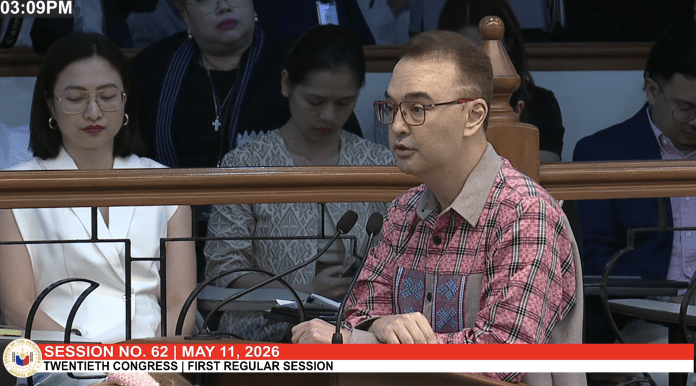
As Alan Peter Cayetano took the gavel, the atmosphere changed. Not because of some dramatic display of force, but precisely because there wasn’t one.
The noise softened.
The temperature lowered.
And for the first time in a long while, the Senate began to feel less like a battleground for personalities and more like what it was always supposed to be: an institution.
Finally, it seems, there is an adult in the room.
The “adult” in politics is not the loudest voice. It is the one who understands that institutions are fragile, that constitutional processes matter, and that leadership is measured not by how much chaos one can create—but by how much stability one can preserve.
In an era where influencers often masquerade as statesmen, sobriety has become almost revolutionary.
The timing could not be more critical.
The country now stands at the edge of a constitutional and political storm, with impeachment proceedings threatening to deepen already dangerous national divisions. In the hands of lesser leaders, such a moment could easily devolve into a circus—part spectacle, part vendetta, part ratings war.
But Cayetano’s early signals suggest a different posture: not arsonist, but stabilizer.
By consistently framing the Senate’s role around due process, constitutional duty, and institutional stewardship, he is sending a message that many Filipinos have been longing to hear: the Senate is not supposed to inflame crises for political gain. It is supposed to help the nation navigate through them.
And that distinction matters.
Critics, of course, will call this restraint “calculated.” They will interpret his emphasis on governance, healthcare, efficiency, and day-to-day national concerns as an attempt to avoid political confrontation.
But they miss the point entirely.
It is precisely because the political drama is so intense that governance must remain grounded. A nation cannot survive indefinitely on adrenaline and outrage alone. Someone still has to keep the machinery of government functioning while everyone else is busy performing for the cameras.
What Cayetano appears to be building is not the image of a factional warrior, but of a constitutional referee—someone attempting to lower the national temperature rather than exploit it.
Even his calibrated approach to sensitive issues, from the West Philippine Sea to internal Senate dynamics, reflects a broader message: strength without hysteria, leadership without constant spectacle.
After years of political heat, the public is beginning to crave something else:
clarity,
stability,
competence,
and perhaps most of all, maturity.
Whether this statesmanlike posture can survive the immense pressures of the months ahead remains uncertain. Philippine politics has a way of punishing restraint and rewarding chaos.
But for now, at least, the mood has changed.
The tantrums have quieted.
The adults are back.
And maybe—just maybe—the Senate can finally get back to work.