
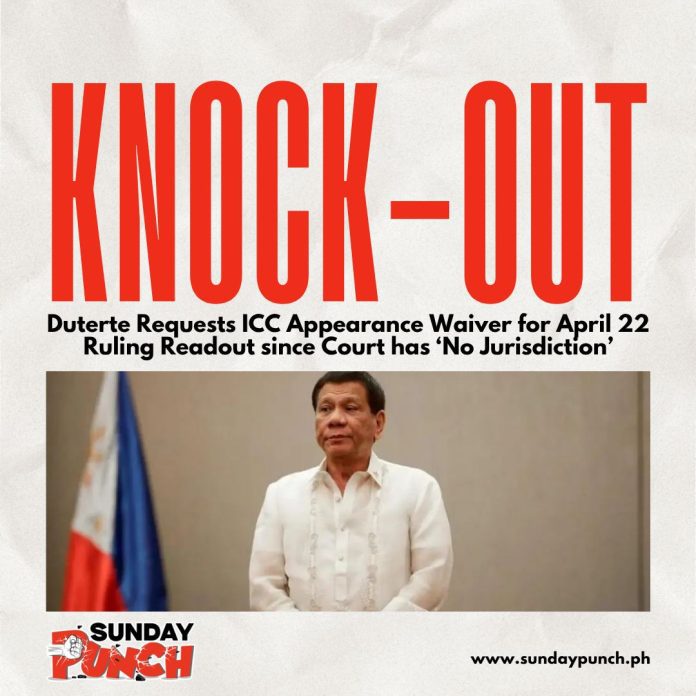
Former President Rodrigo Duterte has asked the International Criminal Court (ICC) Appeals Chamber to let him waive personal appearance at the April 22 session where the court will read its decision on his appeal—an appeal tied to his long-running challenge to the ICC’s jurisdiction over his case.
In a three-page request dated April 13 and signed by his lawyer Nicholas Kaufman, Duterte said he would be represented by counsel instead. The Appeals Chamber is scheduled to deliver its judgment in open court on April 22 at 11:00 a.m. in The Hague, Netherlands—but Duterte’s team is effectively saying: you can read whatever you want; we’re not treating this as a court with authority over him.
And that’s the point. Duterte already skipped earlier ICC proceedings, and his camp has been consistent on one line: he does not recognize the ICC’s jurisdiction—especially after the Philippines’ withdrawal from the Rome Statute became central to the dispute. Whether people agree or not, the move isn’t “hiding”—it’s a procedural stance: show up through lawyers, preserve objections, don’t legitimize the forum with your presence.
Duterte is facing crimes against humanity charges linked to his administration’s anti-drug campaign, and this jurisdiction fight has been part of the case since his arrest in the Philippines and transfer to the ICC in March 2025. April 22 now becomes another pressure point—not just about a ruling, but about whether the ICC can keep projecting authority over a former head of state who’s openly disputing the court’s reach.
Image from Reuters