
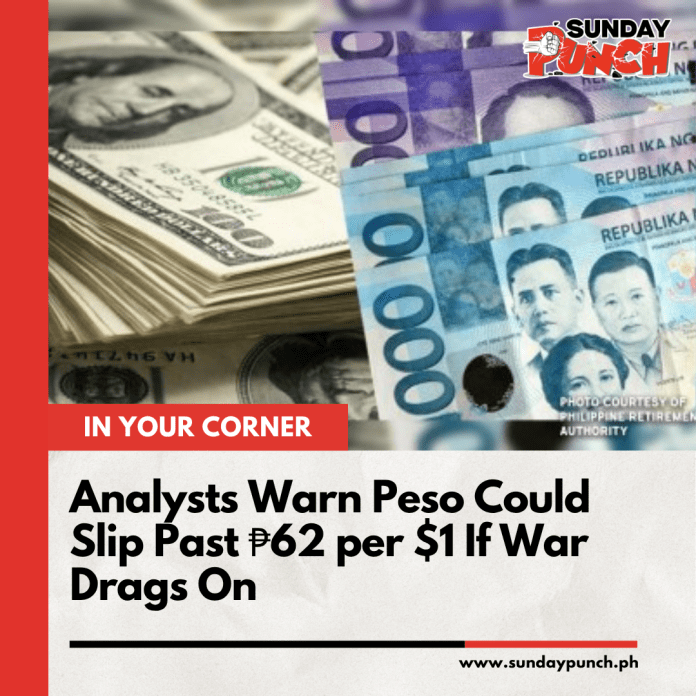
The peso may keep weakening as the Middle East conflict stretches out, with MUFG warning the currency could trade around ₱60.50 to ₱61.50 per $1 in their base case—and break past ₱62 if conditions get worse. Translation for everyday Filipinos: the longer the war shakes oil and supply chains, the more expensive imports get—and that pressure can show up fast in prices at home.
MUFG also flagged a harsher possibility: inflation could climb to 7.5% in a bad scenario, or even hit 10% in a severe one. If that happens, it’s not just “mahal ang bilihin”—it can also mean slower growth, supply issues, and in the worst case, a possible recession.
That’s where the Bangko Sentral ng Pilipinas (BSP) comes in. MUFG says extreme inflation would likely push the BSP to raise interest rates more aggressively, with an added 75 basis points bringing the policy rate to 5.25%. Higher rates can help fight inflation—but they can also make borrowing more expensive, which affects loans, businesses, and spending.
This warning comes as inflation already jumped to 7.2% in April, the fastest in three years, and the economy slowed to 2.8% growth in Q1 2026. The BSP has started tightening—raising rates to 4.5% on April 23—and has acknowledged the inflation outlook is getting worse, with officials signaling more “modest” hikes may follow.