
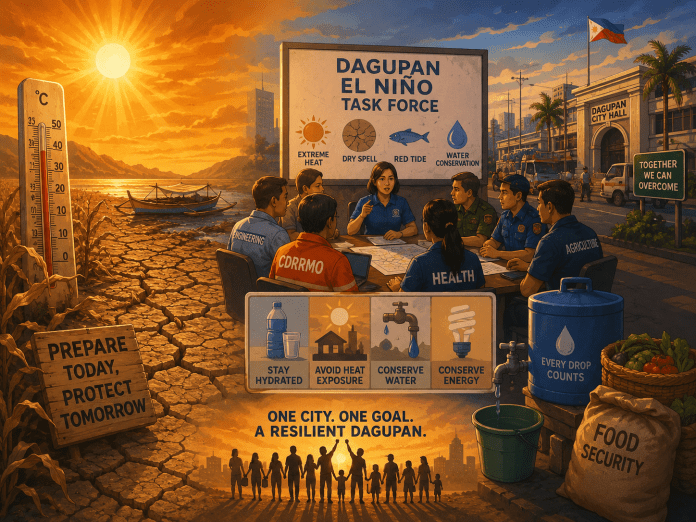
Even before the state weather bureau raised an El Niño alert on April 22, Mayor Belen Fernandez had already convened the Dagupan El Niño Task Force. This quick and decisive action shows the urgency of the threat ahead.
With a 79% chance that El Niño will develop between June and August 2026 and possibly last until early 2027, the warning is clear: Dagupan must get ready for extreme heat and long dry spells.
The city, which often records some of the country’s highest heat indices during summer because of its proximity to the Lingayen Gulf at an average of 43 degrees Celsius, Dagupan faces increased risks—parched farmland, lower fishpond yields, and harmful algal blooms that cause red tide, making shellfishes unsafe for human consumption, and therefore less income for fish farmers.
While water supplies are currently stable, officials warn that a prolonged drought could stretch resources thin. Preventive measures are therefore crucial. Immediate concerns include grass fires, prompting city officials to mobilize barangay leaders to clear areas prone to fires and advise residents against burning waste.
Apart from this, Mayor Fernandez put all responsible city government offices on extra alert during the intense summer months—ready to help any distressed city residents as a result of the intense effects of the hot weather..
Residents were also urged to conserve on energy, water, and of course, food, which are expected to grow thin because of the long dry months. They are also advised to stay hydrated and to refrain from going outdoor, while the sun is at its hottest to avoid health risks.
This challenge is not unique. 2026 is expected to be one of the warmest years on record, highlighting a global climate crisis affecting every nation. El Niño and La Niña are no longer distant threats—they are escalating realities impacting food security, water resources, and public safety.
Local preparedness is vital, but it alone isn’t enough. Climate change calls for collective action. Without unity and ongoing commitment—from communities to governments worldwide—the cycle of destruction will only grow worse.
The time to act is now.