
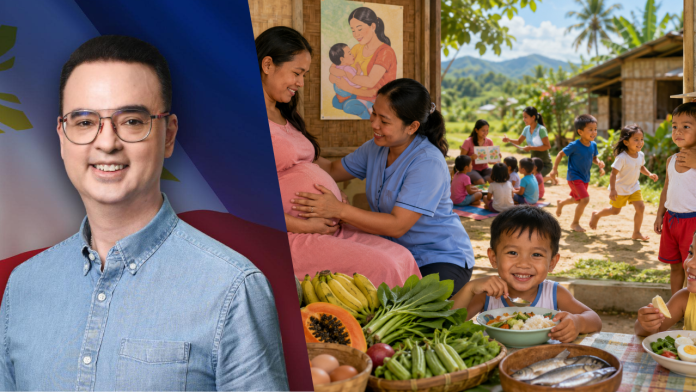
Every July, Nutrition Month reminds Filipinos to eat healthier. But for millions of Filipino children, nutrition is not a month-long campaign. It is a struggle that begins even before birth.
This year’s Nutrition Month comes at a time when the country’s fight against child stunting has suffered a setback. According to the 2025 Survey of the Department of Science and Technology’s Food and Nutrition Research Institute (DOST-FNRI), one in every four Filipino children under the age of five is stunted.
The national prevalence rose from 23.6 percent in 2023 to 25.3 percent in 2025, marking the first increase in a decade after years of gradual decline.
The figures have renewed calls for sustained investments in maternal and child nutrition, including from Senate Minority Leader Alan Peter Cayetano, who has consistently advocated for giving children a healthier start during the first 1,000 days of life.
Stunting is often misunderstood as simply being shorter than average. But according to the World Health Organization, it is the result of chronic undernutrition and repeated infections during the first 1,000 days of life, from pregnancy until a child’s second birthday.
Once this critical window is missed, the effects on physical growth and cognitive development are largely irreversible.
Children who are stunted are more likely to struggle in school and face a greater risk of chronic diseases later in life. As adults, they are also more likely to have lower productivity and earning potential.
The challenge is especially urgent in poor and rural communities, where limited access to nutritious food, healthcare services, and sanitation continues to place children at greater risk.
Experts have also warned that without stronger interventions, the country’s stunting rate could remain close to 30 percent over the next decade.
Yet there are also reasons for optimism.Across the country, several local governments have shown that sustained investments can make a difference.
Among those recognized by education and nutrition experts is the City of Taguig. Rather than treating nutrition as a stand-alone program, the city adopted an integrated approach that combined nutrition services, regular health monitoring, early childhood education, and physical activity. The result was one of the country’s lowest reported stunting rates at 0.2 percent.
For Cayetano, being a true Taguigeño, the experience demonstrates that addressing child malnutrition requires consistent policies and coordination among national agencies, local governments, healthcare workers, schools, and families to ensure that children receive the support they need during the first 1,000 days of life.
As the country marks another Nutrition Month, the true measure of success is whether more Filipino children are given the opportunity to grow, learn, and thrive.
Nutrition Month lasts 31 days. A child’s first 1,000 days last nearly three years. That is where the country’s attention and investment should remain, long after July comes to an end.