
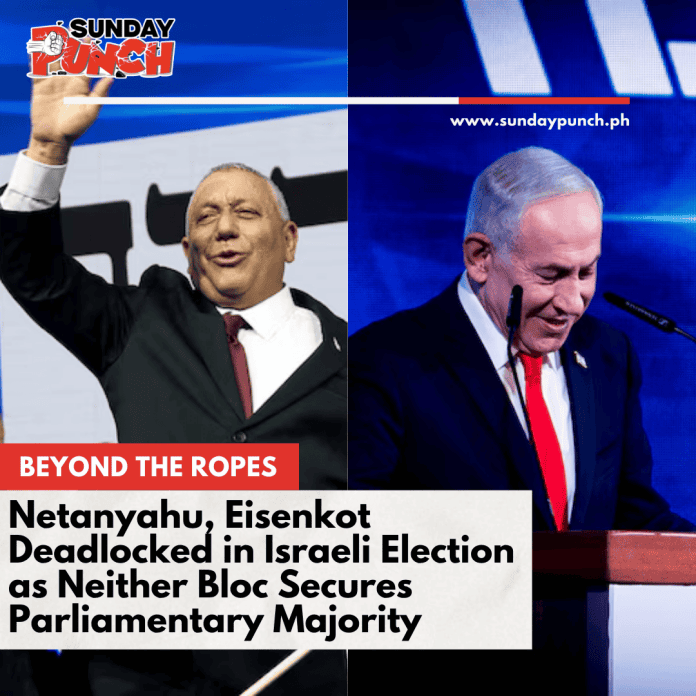
Israeli Prime Minister Benjamin Netanyahu faces an uncertain path to another term after exit polls from the country’s October 27 parliamentary election showed his political alliance deadlocked with the opposition bloc led by former military chief Gadi Eisenkot. Updated projections from Israel’s major television networks placed both camps at approximately 49 to 52 seats each, leaving neither with the 61 seats required to control the 120-member Knesset. The election, Israel’s first since the October 7, 2023 Hamas-led attacks and the wars that followed, drew a 77.7% voter turnout, the highest in more than two decades. The preliminary results represent a significant challenge for Netanyahu, whose outgoing coalition held 68 parliamentary seats.
Eisenkot declared that voters had chosen political change and pledged to move quickly toward forming a new government, arguing that Netanyahu’s leadership had lost public support. He also warned the prime minister against using national security decisions for political advantage, reflecting tensions that dominated the campaign. Netanyahu, however, rejected suggestions that his political mandate had ended, emphasizing that his Likud party remained the largest individual party in parliament and calling for a new right-wing government. Meanwhile, Arab Israeli parties emerged as potential power brokers, with exit polls projecting approximately 17 to 18 seats for parties outside the two main blocs. Their support could influence the formation of a governing coalition, although Eisenkot’s reluctance to depend on Arab parties complicates the opposition’s options.
With neither alliance securing a parliamentary majority, Israel now faces potentially prolonged coalition negotiations that could determine whether Netanyahu remains in power or Eisenkot succeeds in replacing him. Smaller parties may become crucial in deciding the next government, while Netanyahu could continue serving in a caretaker capacity during negotiations. Failure to assemble a viable coalition could eventually force another election, extending the country’s political uncertainty. The exit polls are not final election results, and official vote counting may still alter the distribution of seats. For now, the election has left Israel without a clear governing majority, turning the contest from a battle for votes into a struggle to secure enough parliamentary support to govern.
Images from Reuters: Shir Torem, ABC News: Hamish Harty)