
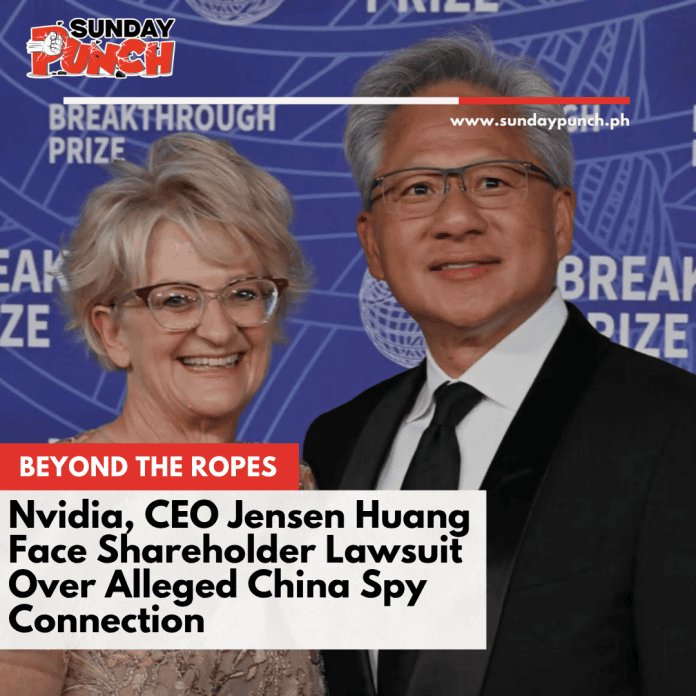
A controversy involving one of the world’s most influential technology executives has escalated into a legal battle, with Nvidia and CEO Jensen Huang facing a shareholder lawsuit over allegations that the company concealed information about Huang’s reported ties to a suspected Chinese intelligence operative.
The proposed class-action lawsuit, filed in a federal court in San Jose, California, on November 9, 2026, accuses Nvidia and Huang of misleading investors by failing to disclose alleged national security risks connected to the CEO’s personal relationship with Alice Huang, a former executive of Singapore-based technology company Megaspeed. The plaintiffs argue that the undisclosed information could have affected Nvidia’s reputation, business operations, and investment outlook.
The allegations follow reports that U.S. authorities had identified Alice Huang as a suspected Chinese intelligence asset. However, those allegations have not been established as findings of wrongdoing by a court. Jensen Huang acknowledged being unfaithful to his wife in a November 8 message to Nvidia employees, although he did not identify the person involved.
Nvidia’s board has launched an independent investigation into whether its CEO may have been targeted by a foreign intelligence operation. The company said independent directors and outside legal counsel would oversee the inquiry, while emphasizing that it currently has no reason to believe its confidential information or U.S. national security had been compromised. Huang has pledged to cooperate with the investigation.
The controversy has also shaken investor confidence. Nvidia shares fell 4.3% on November 9, wiping approximately $190 billion from the company’s market valuation in a single trading session. The lawsuit was filed shortly after the U.S. stock market closed, with shareholder Mark Kistenmacher and other proposed class members seeking unspecified damages over alleged securities law violations.
The dispute extends beyond Huang’s personal conduct, raising questions about corporate disclosure obligations and national security risks within the global artificial intelligence industry. As a leading developer of advanced AI chips, Nvidia occupies a strategically important position in the growing technology competition between the United States and China.
For now, the shareholder allegations remain unproven, and Nvidia’s internal investigation is ongoing. The outcome could have significant implications for how major technology companies manage sensitive executive relationships, communicate potential risks to investors, and protect proprietary information.