
By Farsh G. Decano
Senateflex again
The Philippine Senate has officially retained its title as “Senateflix,” serving up weeks of non-stop political drama. The past few days alone felt like a prime-time series.
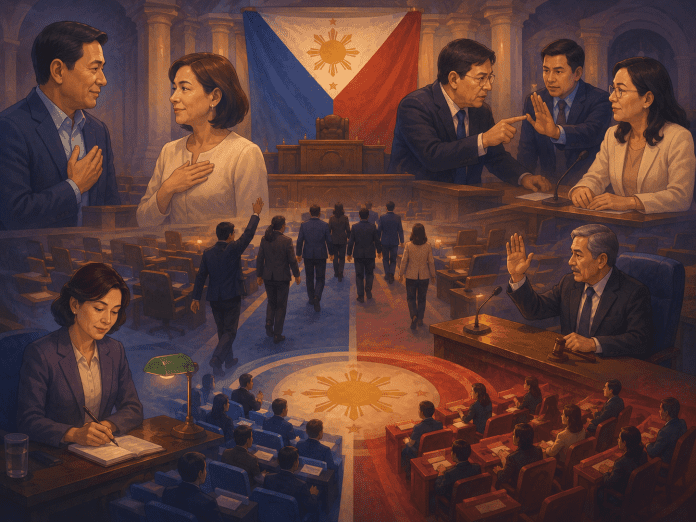
First, Senator Lito Lapid broke his silence to tell Senator Pia Cayetano, “Mahal kita”—a sweet, tension-breaking gesture after Cayetano complained about being cold-shouldered by colleagues during a recent so called, “Senate attack.”
Then came the friction. Senator Marcoleta took a condescending swipe at Senator Risa Hontiveros, questioning her lack of a legal background. Senator Tulfo quickly raised a point of order, shutting down the ad hominem attack.
The climax, however, was the minority walkout. While ten senators exited the floor, Senator Tito Sotto stayed behind to call out the lack of a quorum. Marcoleta argued the quorum was continuous, but Sotto stood his ground: a quorum call is mandatory, and without the numbers, adjournment is automatic. It was a masterclass in how parliamentary rules protect the minority from the tyranny of the majority.
As a former councilor and past National President of the Lady Local Legislators’ League of the Philippines, I know this game well. Presiding over 300 strong-willed women leaders taught me that managing a legislature requires quick thinking, firmness, and creativity.
It also takes humility to be a presiding officer. The Senate President must be able to “massage” both sides so that members of the assembly will not turn rabid against him or against each other. Quick declaration of suspension of the session is usually made to cool down rising tempers.
What a presiding officer should avoid is an extremely divided house. When an institution becomes too polarized, objectivity dies. Debates stop being about policy and start being about personalities. We saw this when Pro Tempore Loren Legarda rejected a motion by Senator Kiko Pangilinan, citing a grudge from all the way back in 2004 when he routinely dismissed her with a cold “noted.”
While the current 13-11 split in the Senate highlights a deeply fractured chamber, it also shows democracy in action. The tight numbers can prevent manipulation and concealment by the majority. A strong opposition can demand more discussion on a certain issue.
We hope that, in the coming days, the Senate will regain its good reputation because of its substance, not spectacle. There will be no drama, no histrionics – just two opposing sides debating with facts in an orderly and respectful manner.