
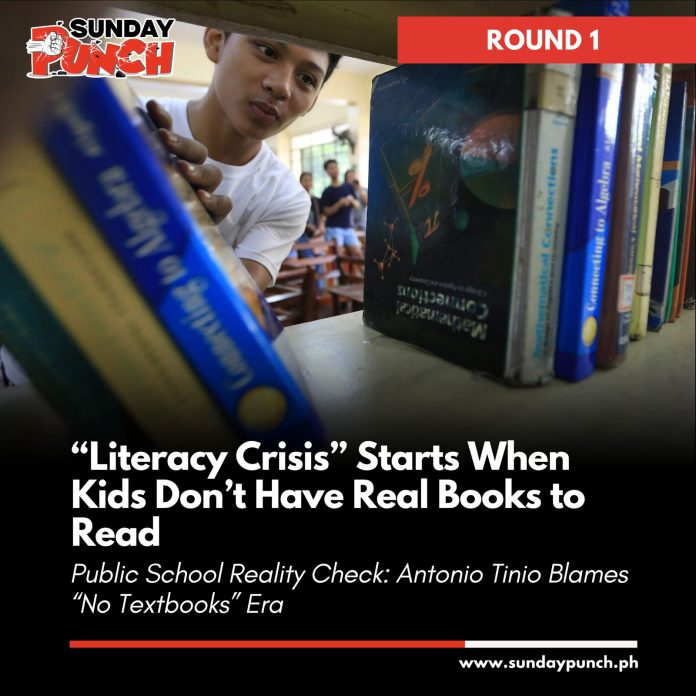
ACT Teachers party-list Rep. Antonio Tinio is pushing a simple fix to a complicated problem: bring back textbooks as the main tool in public school learning, arguing that the country can’t talk about a “literacy crisis” while students barely have actual books to read. His warning follows data cited from EDCOM 2 showing DepEd reportedly procured only 27 textbook titles across more than a decade—fueling questions about what learning materials replaced books, and whether that shift helped or hurt reading skills.
Tinio’s claim is that the drop wasn’t just a “procurement delay” story—it was a policy and classroom practice shift after K-12, where schools leaned harder on modules and other materials that could arrive inconsistently, sometimes even devolving into teacher-made slide decks and photocopies. For him, that creates a real-world consequence: students don’t have something solid to bring home, reread, and build fluency with—especially for kids who don’t have extra reading materials at home.
He also pointed out the gap between systems: private schools largely kept textbooks central, while many public school learners have had to rely on what’s available, not what’s ideal. Tinio’s argument is blunt: literacy needs repeated exposure to reading, and you don’t get that when students are stuck with thin modules or incomplete materials that don’t function like a book you can live with all school year.
DepEd, for its part, has said it recommends textbooks as a primary source of instruction and has presented timelines for procurement and delivery by grade level batches, while also acknowledging that delivery has been incomplete in some subjects and levels. Tinio says those admissions are exactly why DepEd shouldn’t just promise speed—it should clearly explain why textbooks were sidelined for years and what concrete policy will ensure students get complete books, on time, and actually used in class.
Image from Edd Gumban, The Philippine STAR