
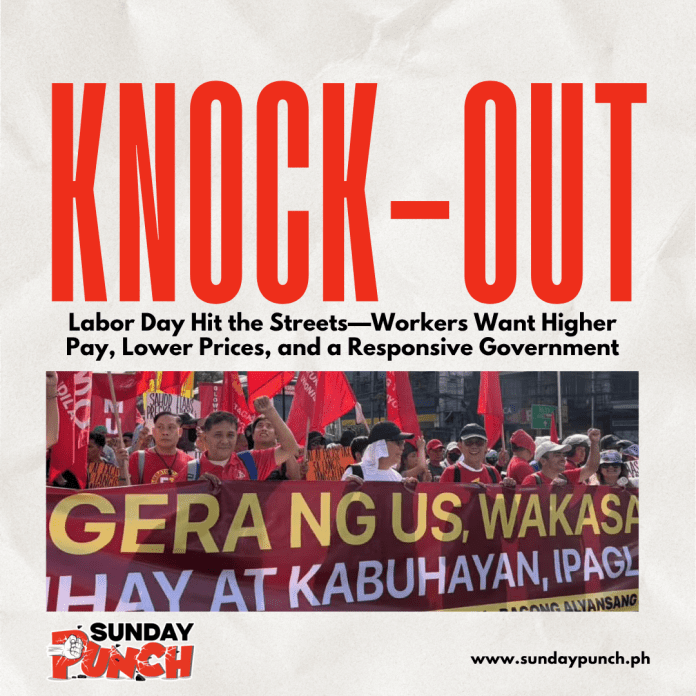
Labor Day wasn’t just a celebration this year—it turned into a street-level warning shot. Workers marched on May 1 carrying the same demands they’ve been repeating for years: raise wages, protect jobs, and do something real about the crushing cost of living. The National Wage Coalition pushed for a P1,200 daily wage, while labor groups also demanded job security, price relief, and an end to policies they say keep ordinary workers stuck in survival mode.
What made the protests sharper was the bigger picture hanging over them. Labor groups argued that workers are not only being squeezed by low pay and unstable work, but also by the economic fallout of the war in the Middle East. Their message was blunt: when global conflict drives up fuel and basic goods, it’s Filipino workers who get hit first and hardest. And in their view, the Marcos administration has not exactly shown urgency, with protesters calling out the government as silent, anti-worker, and ineffective while families keep absorbing the damage.
The demands on the street were not small or symbolic. Protesters called for a nationwide living wage, lower prices of essential goods, removal of VAT and excise taxes, regular and safe jobs, and respect for workers’ rights to unionize and organize. In short: not band-aid solutions, not slogans, but concrete fixes. Because for many workers, “Labor Day” means very little if wages still don’t match reality and jobs still come without stability or dignity.
Various labor and union groups gathered along España Boulevard and Welcome Rotonda before heading to Mendiola, turning the annual observance into a direct show of frustration. Groups under the Nagkaisa Labor Coalition, including KMU, TUCP, BMP, and other worker organizations, joined the action. The message was clear: Filipino workers are tired of being praised every May 1, then ignored the rest of the year.
Image Kilusang Mayo Uno FB