
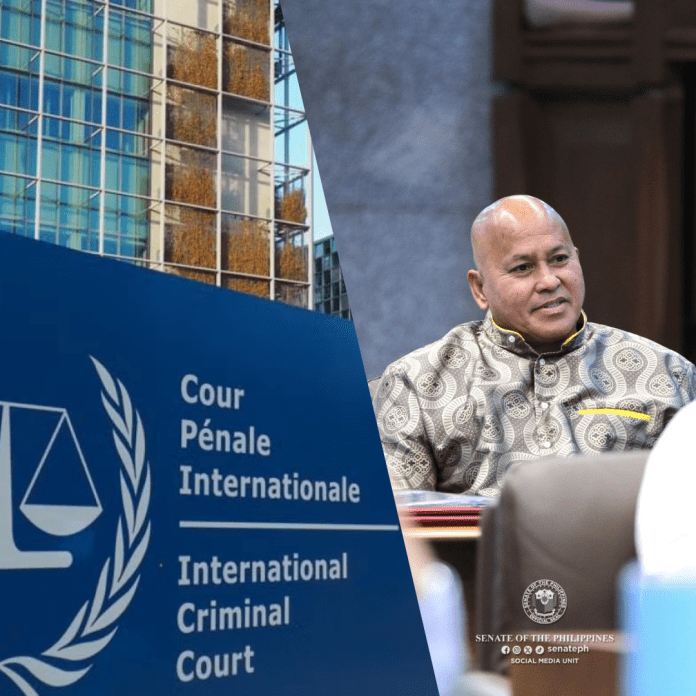
MANILA — The Supreme Court’s 9–5 vote denying Senator Ronald “Bato” dela Rosa immediate protection from arrest has opened a far bigger political and constitutional question: is the Philippine justice system now effectively admitting that it cannot handle its own cases?
The International Criminal Court is supposed to be a court of last resort. It enters the picture only when a country is unwilling or unable to genuinely investigate and prosecute alleged crimes within its own system.
That is the heart of the ICC’s principle of complementarity.
So if Philippine institutions now choose to cooperate with an ICC process against a Filipino senator, instead of first requiring a full domestic prosecution under Philippine law, critics say the message is unavoidable:
The Philippine justice system is being treated as either incapable, irrelevant, or already bypassed.
Critics of the SC decision argue that this is not simply about Senator dela Rosa. It is about sovereignty, due process, and whether Filipino citizens can still rely on their own courts before being exposed to foreign prosecution.
They say the ruling strengthens the very narrative used by the ICC to justify its intervention: that the Philippines cannot, or will not, prosecute cases arising from the drug war on its own.
Instead of proving guilt, they argue, the ICC process exposes institutional weakness. If there is evidence against dela Rosa, they ask, why not charge him before a Philippine court? Why not prosecute him under Philippine law? Why must the State lean on an international tribunal if its own justice system is supposedly alive and functioning?
The 9–5 vote may therefore be remembered not only as a legal setback for dela Rosa, but as a political admission with far-reaching consequences.
To legal experts this sends a dangerous signal: that Philippine institutions are now willing to outsource justice, surrender sovereignty, and allow foreign processes to take priority over domestic courts.
The Supreme Court has not yet resolved all issues in dela Rosa’s petition. But the political damage may already be done.
Because for many Filipinos, the question is no longer just whether Bato dela Rosa should face charges.
The question is whether the Philippine justice system still has the confidence to try him itself.