
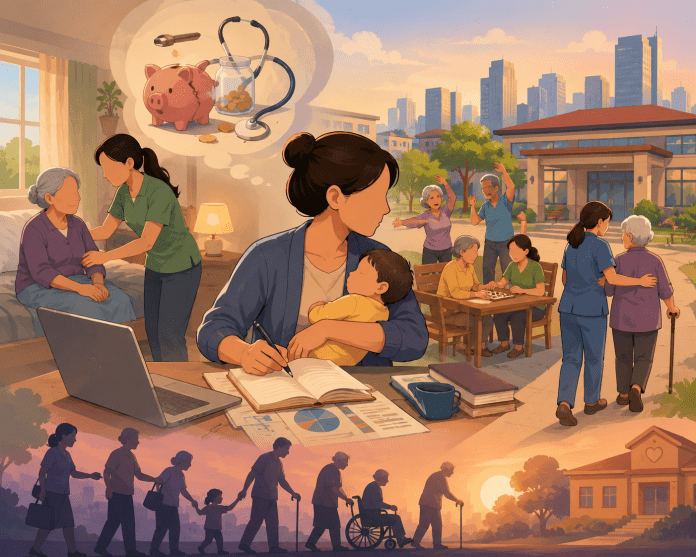
Caregiving is not counted in GDP, but it shapes the economy. Millions of Filipino women are adjusting careers, savings, and health to fill a gap the system has yet to address.
A recent Sun Life study shows that about 85 percent of Filipinas expect to support their parents’ elderly care. Yet only one in five is setting aside funds for it.
Around 83 percent of women say caregiving weakens their financial security. Nearly 7 in 10 say it slows their career growth.
The same share admits it affects their health and well-being. This is the country’s “silent care economy.” It runs without formal support. It depends on time, unpaid labor, and sacrifice from mostly women.
For years, elder care in the Philippines has been treated as a private responsibility. And it is sad that government support comes later, if at all.
Today, there are only 76 residential care centers nationwide, and these are not even exclusive to senior citizens. That supply will not keep up because studies show that by 2030, the country is expected to become an aging society.
In Taguig, a city-run center for senior citizens already offers a glimpse of what structured support can look like. It provides accessible healthcare, wellness programs, and spaces for social interaction for older persons who do not require intensive institutional care.
A similar model is now being proposed for nationwide rollout.
One Senate measure, filed by Senator Alan Cayetano, seeks to establish dedicated Centers for the Elderly in every city and municipality, creating a network of community-based hubs that can share the responsibility of care across government, families, and the private sector.
Imagine, if one city can build and sustain this kind of support, can others do the same?
Expanding this model will require funding, coordination, and clear standards across local governments. It will also require treating elder care not as an afterthought, but as essential social infrastructure.
Right now, we should consider elder care as an economic one. When millions of women adjust their lives to fill gaps in care, the impact spreads across productivity, savings, and long-term growth.
The silent care economy has carried Filipino families for years. But it cannot carry the future alone. If the Taguig model proves anything, it is that support systems can work when they are built with intent.
Image from Manila Standard