
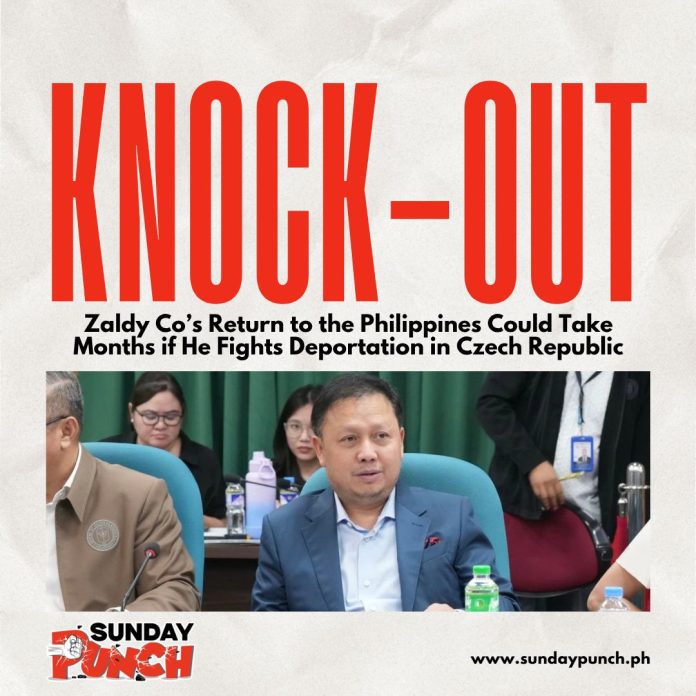
International law experts are warning that fugitive ex-lawmaker Elizaldy “Zaldy” Co may not be back in Philippine custody anytime soon—especially if he contests deportation or files for asylum in the Czech Republic. Without an extradition treaty between Manila and Prague, the timeline hinges on Czech legal procedures and diplomatic coordination, not just Philippine demands.
Lawyer Ralph Sarmiento said the fastest route is administrative deportation, which could be done in under two weeks—but only if Co doesn’t appeal the Czech foreign police decision. He stressed that the key move now is aggressive coordination between the DFA and Czech authorities to negotiate immediate deportation terms, because the Czech side ultimately controls how fast—or slow—this process moves.
But if Co chooses the “delay play,” the clock changes. Legal experts flagged a possible asylum bid—where Co could claim political persecution to block removal. If asylum proceedings begin, deportation processes can be paused, and Co could even seek release from detention while his case is reviewed. That’s why experts say the Philippine government must frame this clearly as prosecution, not persecution—with warrants and cases as proof.
Worst-case scenario: under Czech rules, administrative expulsion processes can stretch long—reports point to timelines that can run up to around 545 days in complex cases, and that’s before counting the extra time for asylum decisions and court challenges. Bottom line: Co’s return can be quick only if he doesn’t fight it. If he fights, this becomes a long game—and the public will be watching if the government can keep pressure on and close the loopholes.
Image from PPAB