
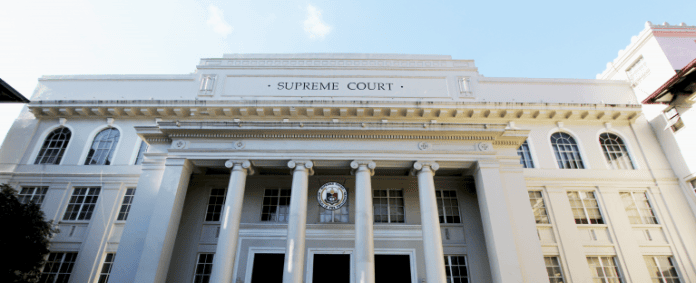
The Supreme Court’s ruling declaring recent national budgets unconstitutional has prompted calls for accountability among Filipino netizens, after columnist Rigoberto Tiglao pointed out that it exposes grave governance problems under President Ferdinand Marcos Jr.
“So? Next step?” reader Abraham Hewe asked in response to Tiglao’s October 23 column, titled “SC decision shows: Marcos Jr. regime the most corrupt since 1986.”
Tiglao emphasized that responsibility for the unconstitutional budget measures extends to Marcos, who signed the budgets and whose administration implemented them. He questioned the congressional increases, lump-sum allocations, and undocumented budget changes identified by the Court.
He even characterized the Marcos Jr. administration as the most corrupt since 1986.
Several readers voiced agreement with the veteran columnist’s assessment.
“Now someone has put it into exact words,” Kim Sab-it commented.
“It was kind of obvious from the start,” another commenter wrote.
Other readers questioned why the budget ruling was not receiving more media coverage as social media attention focused on efforts to arrest Senator Ronald “Bato” dela Rosa.
“Pero mas focus ngayon ang media kay Bato,” Matias Art commented.
Some netizens also did not help but draw a parallel between Marcos Jr.’s alleged corruption and that of his father, former President Ferdinand Marcos Sr.
“Biruin niyo, parang to be continued lang,” netizen Jayson Cortez Jacinto wrote.
From a Supreme Court ruling to accountability
In a decision penned on October 7, the Supreme Court declared the 2024 national budget unconstitutional after Congress added P449.5 billion in unprogrammed appropriations, raising total appropriations beyond the President’s recommendation.
It also declared the 2025 budget unconstitutional over a P17.99-billion increase in the Department of Public Works and Highways’ Special Road Fund, and struck down certain provisions governing unprogrammed appropriations in the 2026 budget.
The Court found that allocations under the Strengthening Assistance for Government Infrastructure and Social Programs, or SAGIP, in the 2024 and 2025 budgets constituted prohibited lump-sum appropriations. These left essential project-identification and funding decisions to the Executive after the budgets had been enacted.
It also flagged missing records explaining increases, decreases, and other budget changes during bicameral conference committee proceedings.
The ruling leaves open the possibility of further proceedings against those responsible for the unconstitutional measures.
The Court clarified that the doctrine of operative fact may protect certain irreversible transactions undertaken in good faith, but does not automatically shield the authors, proponents, or implementers of unconstitutional measures from criminal, civil, or administrative liability.
Any liability must be determined by the proper tribunals based on the evidence and applicable law.
For the reading public, the question is whether the Court’s findings will lead to investigations and action against those found responsible.
“History will tell,” netizen Suflod Tubay wrote.