
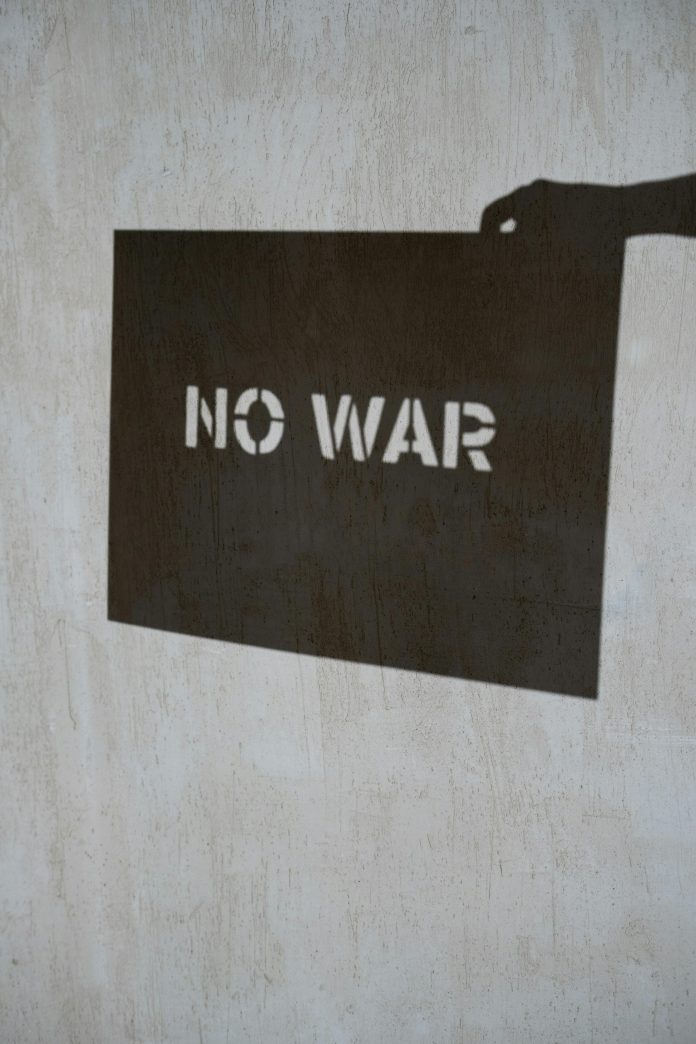
As the crisis in the Middle East deepens, many ordinary people around the world are asking the same question: Is war really the path to peace?
As an online English tutor who speaks daily with students from different countries, I hear remarkably similar sentiments. Regardless of nationality, religion, or political views, all of them express the same hope—that violence will not be the solution and that dialogue must eventually prevail.
Last Sunday, here in Pangasinan, I witnessed how global tensions can quickly affect everyday life. Motorists lined up at gasoline stations, forming long queues that stretched along busy roads. I waited for two hours before deciding to fill up my tank. But when I had finally decided, I was greeted by a simple but frustrating sign: “Out of Stock.” The experience left many motorists wondering whether supply had truly run out or whether some stations were withholding fuel in anticipation of higher prices.
In response, some local government units moved quickly, warning gasoline stations against arbitrarily raising prices ahead of scheduled adjustments. A few establishments were reportedly issued notices of violation. These actions are important. During uncertain times, businesses carry a responsibility not only to operate legally but also to act ethically. Hoarding supplies or manipulating prices may bring short-term profit, but it erodes public trust and deepens the hardship of already struggling communities.
The burden, however, falls heaviest on those who can least afford it. Drivers and operators of public transport—passenger buses, jeepneys, and tricycles—must spend more on fuel even when fares remain unchanged. Many of them continue to ply their routes faithfully, ferrying workers and students to their destinations despite shrinking earnings. A small gesture of kindness from passengers, such as giving a little extra to hardworking tricycle drivers, can go a long way in easing their daily struggle.
Economic disruptions linked to the Middle East conflict are not limited to the Philippines. My students from other parts of the world say their countries are also experiencing sudden oil price increases. This reminds us how interconnected our world has become. A missile launched thousands of miles away can ripple across markets, households, and livelihoods everywhere.
In response to economic pressures, some workplaces have shortened the workweek from five days to four, extending daily hours to compensate for the lost day. Adjustments like these require flexibility and commitment from employees and employers alike. In times of uncertainty, productivity and cooperation become even more important to keep businesses and communities moving forward.
Ultimately, crises such as this remind us that beyond politics and strategy are ordinary people simply trying to live with dignity. A little patience, fairness, and compassion can make a difference in difficult days.
Let us hope for calmer voices, wiser decisions, and leaders who choose dialogue over destruction. Let us pray for peace in every nation and for a world that finally learns that lasting peace cannot be built through war. And may humanity choose understanding over conflict.