
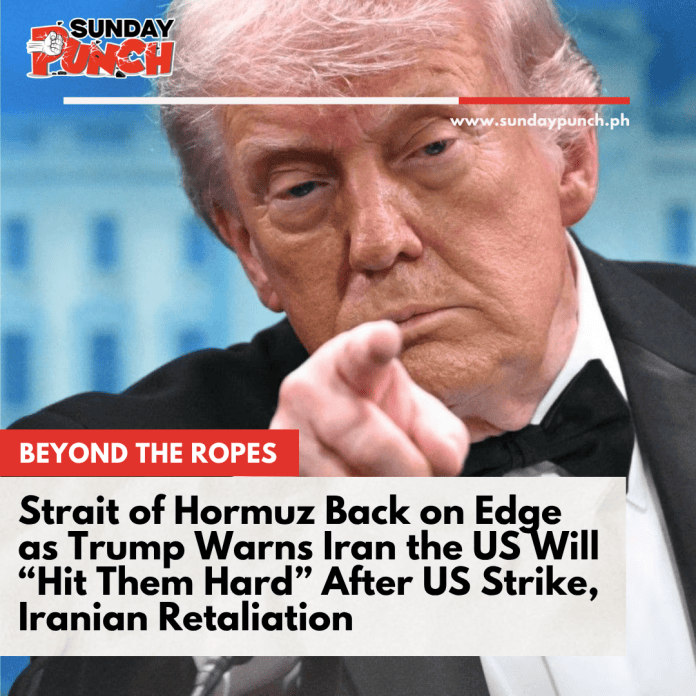
Tensions between the United States and Iran have sharply escalated again after both sides exchanged attacks for the first time in weeks, reviving fears that the fragile pause in hostilities may be giving way to a wider regional confrontation.
US President Donald Trump warned Iran that Washington would “hit them hard” if Tehran continues attacks against American forces and interests in the region. The warning came after the US said it carried out strikes on Iranian rocket launchers on Larak Island, claiming the action was meant to prevent mines from being placed in the Strait of Hormuz, one of the world’s most critical oil transit routes.
Iran responded with missile and drone attacks targeting US forces in the region, pushing the conflict back into dangerous territory. Any renewed fighting around the Strait of Hormuz carries global consequences, with oil shipments, shipping lanes, fuel prices, and regional security all vulnerable to sudden disruption.
Amid the exchange, Iranian President Masoud Pezeshkian called for dialogue, saying continued war would not benefit Iran or the wider region. His statement offered a diplomatic counterpoint to the military escalation, but the situation remains tense as both governments signal they are prepared to respond if provoked further.
For the rest of the world, the stakes go beyond Washington and Tehran. A new cycle of attacks could drive oil market anxiety, threaten commercial shipping, and drag neighboring countries deeper into the fallout. The question now is whether both sides still have room to step back — or whether another flashpoint will push the region closer to open conflict.
Image from Mandel Ngan