
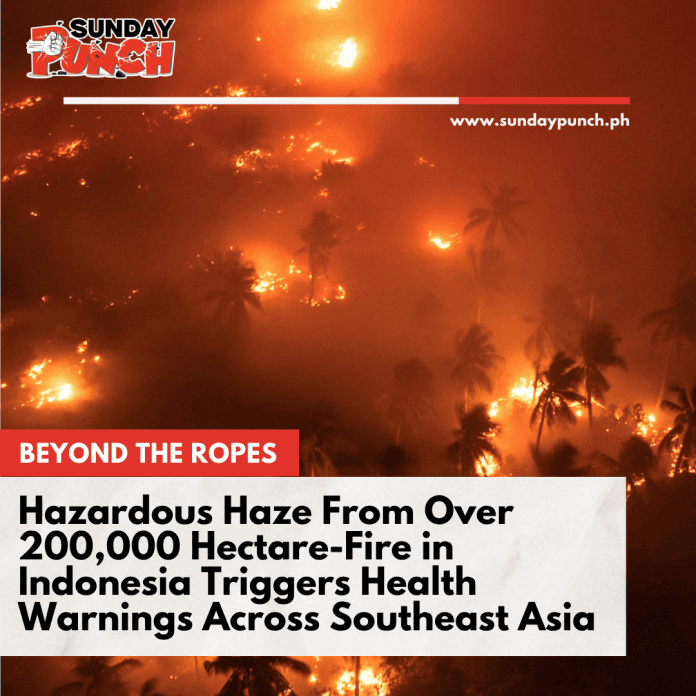
A thick blanket of hazardous haze is spreading across parts of Southeast Asia as wildfires in Indonesia continue to burn, affecting communities in Malaysia, Brunei, and Singapore and raising public health concerns across the region.
The impact has been especially severe in Sarawak, Malaysian Borneo, where air quality readings reportedly climbed above 400 — a level considered dangerous enough to disrupt daily life. Authorities canceled Independence Day events and ordered the closure of hundreds of schools as smoke-filled air made outdoor activity unsafe for students and residents.
Health cases are also rising. Malaysia reported a sharp increase in respiratory and eye-related illnesses, including asthma and conjunctivitis, as the haze continues to irritate lungs, eyes, and throats. For children, the elderly, and people with existing health conditions, prolonged exposure to polluted air can quickly become more than discomfort — it can become a medical risk.
In Indonesia, millions have been exposed to smoke, with more than 200,000 hectares burned across Borneo and Sumatra from January to July. The fires have once again placed the region’s long-running haze problem under scrutiny, especially as smoke does not stop at national borders and can quickly turn a local fire season into a regional public health crisis.
Officials and experts are warning that worsening El Niño conditions may prolong the haze through September or October, meaning affected communities could face weeks more of poor air quality. Until conditions improve, residents are being urged to limit outdoor exposure, wear proper masks when needed, monitor air quality updates, and seek medical attention if breathing problems worsen.
Image from Reuters