
There’s a reason the City of Taguig continues to rank among the country’s top-performing cities. And it’s easy to see why on the ground.
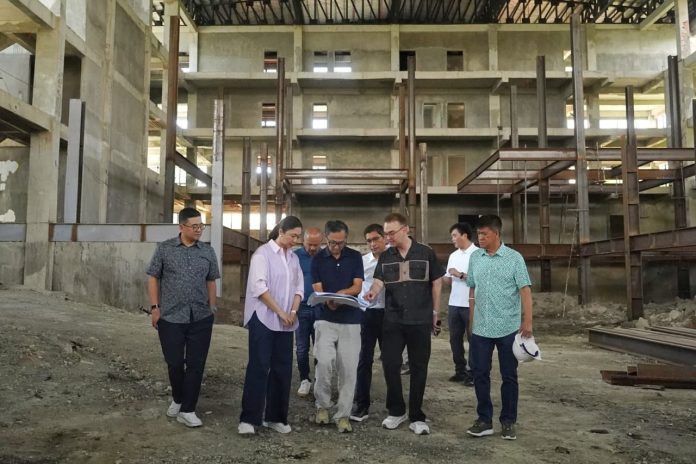
On April 28, 2026, Taguig Mayor Lani Cayetano and Public Works and Highways Secretary Vince Dizon, along with their respective teams, conducted an ocular inspection of several ongoing and proposed infrastructure projects.
These included the Taguig New Justice Hall, the Lakeshore Complex, and the PNP-NCR Regional Forensic Unit Laboratory Headquarters in Camp Bagong Diwa.
The visit focused on progress, timeliness, and readiness as part of a push to keep projects on track and ensure accountability.
Taguig’s development projects stand out for their steady progress amid infrastructure issues persisting in other parts of the country. The city government says this reflects a more transparent and disciplined approach to public projects.
A hub for modern policing
Inside Camp Bagong Diwa, a 12-storey forensic laboratory is taking shape. Once completed, it will bring together 13 technical divisions of the NCR Regional Forensic Unit in one location to allow faster evidence processing and better coordination.
The facility will handle everything from autopsies and drug testing to DNA analysis, ballistics, fingerprints, and document examination.
It’s part of a wider effort to modernize crime labs across the country where forensic evidence is becoming increasingly important in solving cases.
The lab is designed to serve not just Metro Manila but the entire Philippines, with the goal of becoming one of the most advanced in the region.
A new home for justice services
Another major project is the Justice, Law and Order (JLaw) Building, a five-story facility that will house courts, prosecutors, the Public Attorney’s office, and detention areas. Originally planned in 2020 as an Olympic-sized swimming pool, the site has since been converted into a Hall of Justice.
After years of delay and being left unfinished by controversial contractors, the Taguig LGU is now working not to waste the infrastructure by repurposing the building, updating the budget, and moving the project forward with a new contractor.
The building is also designed with public use in mind. Plans include an auditorium, café, roof deck, and open spaces to make legal services more accessible. Once completed, it will replace the current Hall of Justice located at Taguig City University.
Lakeshore Complex
The Lakeshore Complex is also being transformed into a mixed-use waterfront district with parks, commercial areas, and event venues.
Today, parts of the area are already used for jogging, biking, and community events — an improvement from its past when much of it was underutilized due to marshland and informal settlements.
Earlier projects, like the construction of a road dike in 2001, helped make development possible. Current efforts are focused on creating more usable public spaces while maintaining proper planning and execution.
Beside it lies Laguna Lake, a vast freshwater resource with long-standing potential for tourism and livelihood. The lakeshore project aims to turn that potential into real opportunities for residents and visitors alike.
Beyond Taguig
These projects are not just for Taguig City alone. In the coming years, they are expected to benefit not only the city’s residents but also communities across Metro Manila and the rest of the country.
More than new buildings and public spaces, they reflect a broader goal: building infrastructure that works and lasts for generations.
As Taguig continues to rise with purpose, its developments show a city’s progress can extend far beyond its borders.