
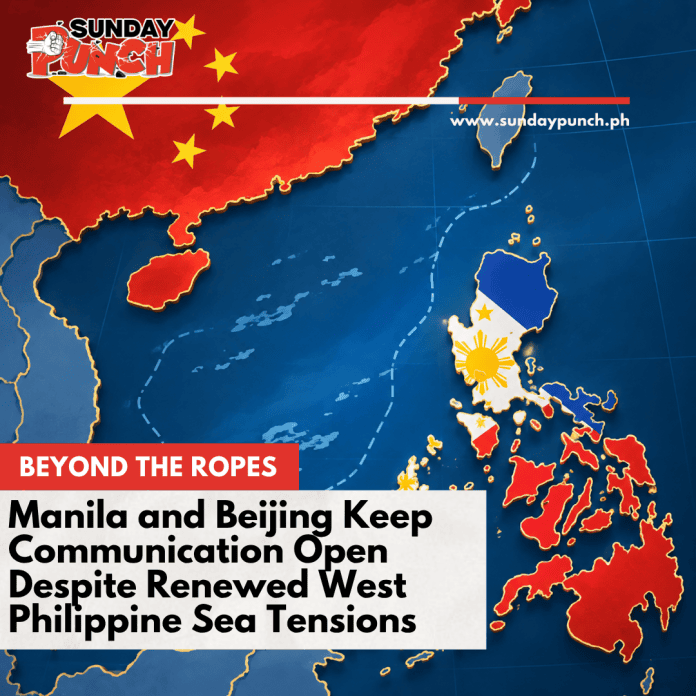
The Philippines and China have agreed to maintain diplomatic communication despite continuing tensions over the South China Sea, following a telephone conversation between Foreign Affairs Secretary Ma. Theresa Lazaro and Chinese Foreign Minister Wang Yi on November 3, 2026. The Department of Foreign Affairs (DFA) described the exchange as frank, pragmatic, and constructive, with both officials recognizing the need to manage disagreements through dialogue, mutual respect, and peaceful diplomatic mechanisms. The conversation followed renewed tensions between Manila and Beijing, including disagreements over maritime activities and recent remarks by Chinese officials that Philippine authorities considered threatening.
While both governments expressed support for continued engagement, their differences over the West Philippine Sea remain unresolved. China’s Foreign Ministry said Wang urged Manila to exercise caution on maritime issues and accused certain Philippine politicians of undermining bilateral relations through hostile statements. The Philippine government, meanwhile, has maintained that diplomatic cooperation must not come at the expense of its sovereignty, sovereign rights, or jurisdiction. The DFA emphasized that stable relations require both sides to avoid rhetoric and actions that could unnecessarily escalate tensions, while continuing discussions through established diplomatic channels.
The two foreign ministers also discussed preparations for upcoming regional meetings, including the 49th ASEAN Summit and Related Summits in Manila on November 15–18 and the 33rd APEC Economic Leaders’ Meeting in Shenzhen, China. Lazaro conveyed President Ferdinand Marcos Jr.’s anticipation of Chinese Premier Li Qiang’s participation in the ASEAN meetings, while Wang expressed China’s expectation of Marcos’ attendance at APEC. Both sides committed to extending appropriate diplomatic courtesies and assistance during these engagements. Although the November 3 conversation did not produce a resolution to the maritime dispute, it signals a willingness to prevent political disagreements from completely disrupting bilateral relations, particularly as regional leaders prepare to meet on trade, security, and economic cooperation.