
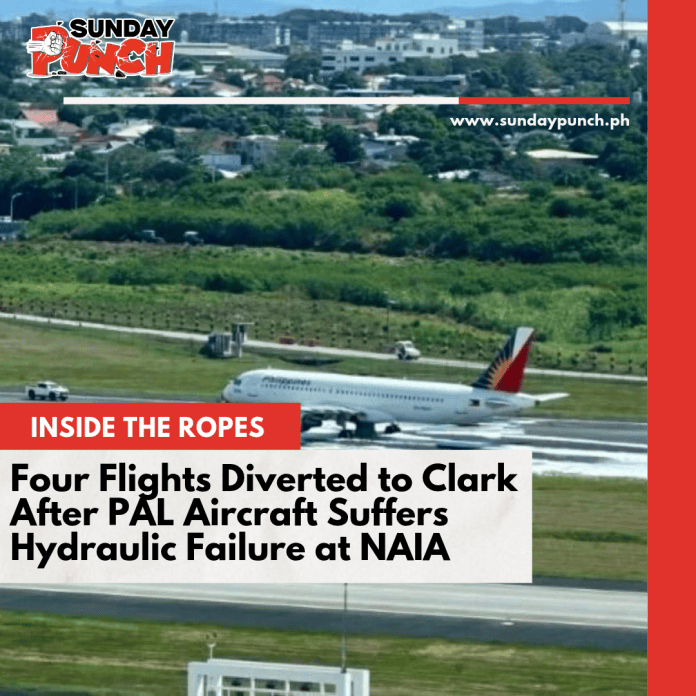
A Philippine Airlines (PAL) aircraft experienced a hydraulic system malfunction on November 29, 2026, forcing it to return to Manila and triggering the temporary closure of the main runway at Ninoy Aquino International Airport (NAIA). Flight PR 2923, an Airbus A320 bound for Daraga, Albay, landed safely after encountering the technical problem, but the aircraft remained disabled on the runway. The incident disrupted airport operations and forced four incoming flights to divert to Clark International Airport in Pampanga.
The Civil Aviation Authority of the Philippines (CAAP) confirmed that NAIA’s primary Runway 06/24 was temporarily closed while authorities worked to remove the disabled aircraft. During the disruption, Runway 13 remained available for aircraft operations, limiting the airport’s capacity to accommodate arriving and departing flights. The four diverted services were PAL 891 from Taipei, Cebu Pacific 313 from Taipei, PAL 659 from Dubai, and PAL 1454 from General Santos City, affecting passengers on both domestic and international routes.
PAL confirmed that all passengers aboard the affected aircraft safely disembarked, with no injuries reported in the initial accounts. The flag carrier said it was coordinating with government agencies and airport authorities to safely remove the aircraft and restore normal airport operations. The airline also apologized to affected passengers as airport personnel worked to address the disruption. The reported hydraulic malfunction prompted the aircraft’s return, although the specific technical cause had not been publicly established.
The incident highlights how a single disabled aircraft can disrupt operations at one of the Philippines’ busiest transportation gateways, particularly when its main runway becomes temporarily unavailable. Passengers traveling through NAIA were advised to monitor official airline announcements and confirm their flight schedules amid possible delays and diversions. While the affected PAL flight landed safely, the disruption underscores the importance of aircraft maintenance, emergency preparedness, and effective coordination among airlines and airport authorities to minimize the impact on travelers.
Photo from Ariel Fernandez