
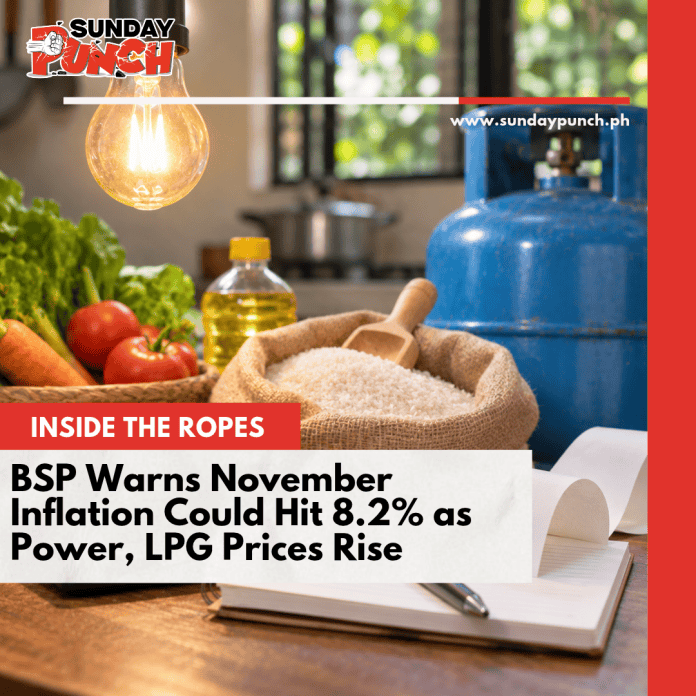
Inflation in the Philippines could reach as high as 8.2% in November 2026 as rising electricity rates and liquefied petroleum gas (LPG) prices continue to put pressure on household expenses, according to the Bangko Sentral ng Pilipinas (BSP). In its November 27 forecast, the central bank projected inflation within a range of 7.2% to 8.2%, compared with the 7.8% officially recorded in October. If the upper end materializes, inflation would reach its highest level since February 2023, further straining Filipino consumers already facing elevated living costs.
The BSP identified higher electricity and LPG prices as major factors that could drive inflation upward, although lower fuel prices and improving food supplies may provide some relief. Favorable agricultural conditions could help moderate the prices of rice, vegetables, meat, and fish, while recent pump price reductions may offset part of the pressure from household energy expenses. Despite these possible improvements, the entire forecast range remains well above the central bank’s 2% to 4% inflation target, reflecting persistent challenges in stabilizing consumer prices.
The inflation warning comes after the BSP raised its key policy interest rate by 50 basis points to 5.5% in October in an effort to contain rising price pressures. Governor Eli Remolona Jr. has signaled that further monetary tightening may be necessary if inflation remains elevated. Higher interest rates can help slow price increases by discouraging borrowing and spending, but they can also increase financing costs for households and businesses, potentially weakening investment and economic activity.
The Philippines is also confronting slower economic growth, with gross domestic product expanding by just 2.1% in the third quarter of 2026, according to the Philippine Statistics Authority. The combination of weak growth and elevated inflation presents a difficult challenge for economic policymakers, who must balance price stability against the risk of further slowing the economy. The BSP said it would continue monitoring domestic economic data and developments in the Middle East, while the official November inflation figure is scheduled for release on December 4.