
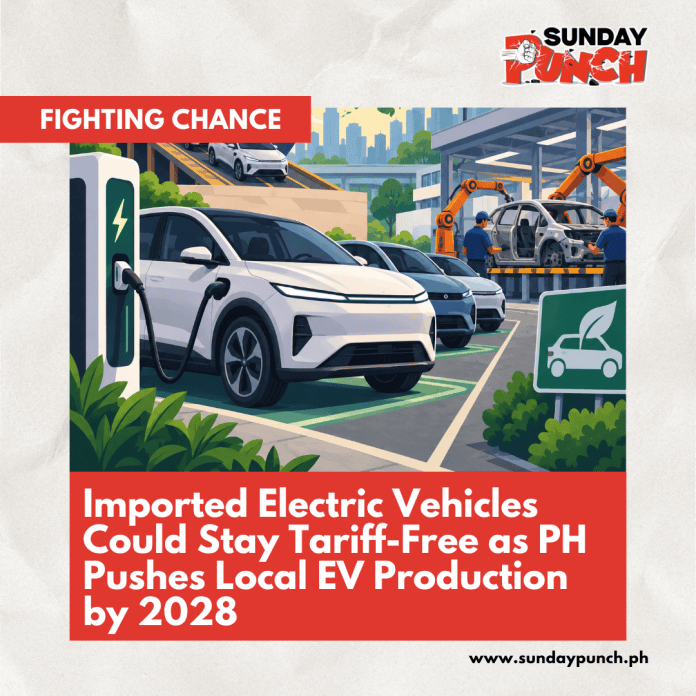
The government is studying whether to extend the zero-tariff policy on imported electric vehicles beyond its current 2028 deadline, as the Philippines tries to make EVs more accessible while also building its own local manufacturing base.
Trade officials said extending the tariff-free policy until 2040 could help lower costs and encourage more Filipinos and businesses to shift to electric vehicles. Cheaper imports could speed up adoption, especially as fuel prices remain volatile and transport operators look for cleaner, more cost-efficient alternatives.
But the decision is not that simple. The government is also rolling out the ₱60-billion Electric Vehicle Incentive Strategy, or EVIS, which is designed to attract automakers and support the start of local EV production. Under the program, participating manufacturers may receive up to ₱15 billion in incentives.
The challenge is finding the right balance. Keeping imported EVs tariff-free may help consumers buy electric vehicles sooner, but the government also wants to make sure the Philippines does not remain only a market for foreign-made units. The bigger goal is to bring jobs, factories, parts production, and long-term industry growth into the country.
Commercial EV production is targeted to begin in the Philippines by 2028, the same year the current tariff exemption is set to expire. That timing makes the policy decision crucial: extend the zero tariff too broadly, and local manufacturers may struggle to compete; remove it too soon, and EV prices may become harder for buyers to reach.
For Filipino consumers, the promise is clear: cleaner vehicles, lower dependence on fuel, and potentially more choices in the market. But for the country, the real fighting chance is bigger than cheaper imports — it is whether the EV shift can also create a homegrown industry that benefits workers, businesses, and the economy in the long run.