
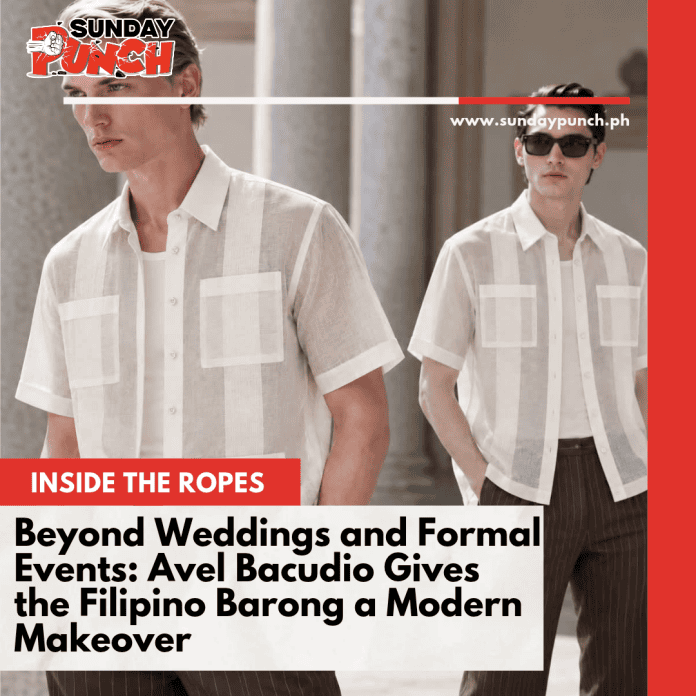
For generations, the Barong Tagalog has been a fixture at weddings, graduations, government ceremonies, and other formal occasions. But Filipino fashion designer Avel Bacudio is challenging the idea that national attire should spend most of its life waiting for an invitation. Through his Polo Barong and Polo Jacket Barong concepts, Bacudio is reimagining the traditional garment as something that can move beyond ceremonial dressing and find a place in contemporary Filipino wardrobes.
At the center of his approach is Piñavel, a textile combining pineapple fiber, cotton, and lyocell to create a material suited to modern clothing. The fabric supports Bacudio’s vision of adapting the barong to more versatile silhouettes while retaining its cultural identity. His designs explore how familiar elements of Filipino traditional attire can be incorporated into contemporary styles, addressing a longstanding fashion question: why should celebrating national heritage require a wedding invitation or an oath-taking ceremony?
The concept also draws attention to a broader challenge facing traditional Filipino clothing: cultural appreciation does not always translate into everyday use. While the barong remains widely recognized as a symbol of national identity, its association with formal events can limit how frequently people choose to wear it. Bacudio’s designs offer one possible response, although transforming traditional attire into everyday fashion also raises practical considerations involving comfort, affordability, maintenance, and accessibility. After all, cultural pride may be priceless, but a garment’s place in the average wardrobe still comes down to whether people can realistically wear and afford it.
Beyond the local market, Bacudio hopes to introduce the barong to a wider international audience. In a recent social media statement, the designer emphasized his goal of promoting Filipino heritage through fashion, arguing that progress should embrace innovation without forgetting cultural origins. His work reflects a wider interest among Filipino designers in combining heritage textiles, craftsmanship, and contemporary design. However, gaining international recognition is only part of the challenge; creating sustained interest in Filipino clothing beyond fashion showcases and special occasions presents another.
Ultimately, Bacudio’s approach raises a question about the future of Filipino fashion: can traditional clothing become a natural part of modern wardrobes without losing what makes it culturally significant? His Polo Barong and Polo Jacket Barong concepts suggest that heritage and contemporary style need not compete. Whether such designs become everyday staples remains to be seen, but the message is clear: the barong has already earned its place in Philippine history. Perhaps it is time to give it more room in the closet.