
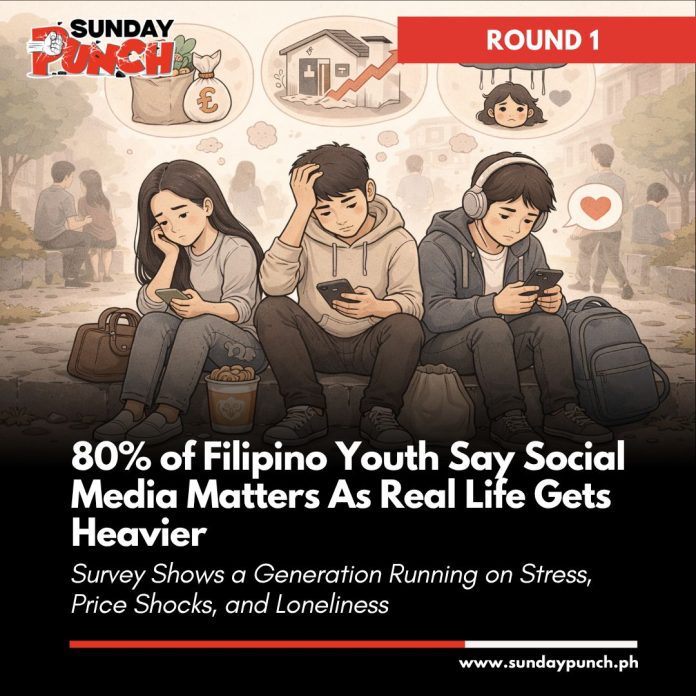
A national survey by Arkipelago Analytics found Filipino youth are still overwhelmingly against social media restrictions—80% oppose any form of curbs. The message is clear: for young Filipinos, digital spaces aren’t just “apps.” They’re where people connect, get information, and speak up—especially when real-life options feel limited.
But the same survey paints a heavier picture behind the screen. Half of respondents said they’re less happy, and the top pressures aren’t trendy, they’re survival-level: food security, rising prices, and loneliness. This isn’t just “Gen Z drama.” It’s a daily squeeze where basic needs are getting harder to manage, and the emotional toll is starting to show.
Housing costs look brutal too. Seven in 10 said they’re struggling to pay rent or mortgage-related expenses, a red flag for a generation trying to stand on their own while costs keep climbing. The survey also noted shifting personal dynamics: only 4 in 10 reported being in a relationship—possibly reflecting how uncertainty, burnout, and isolation are reshaping priorities and social life.
Arkipelago’s founder Anna Mae Lamentillo summed it up: young Filipinos want freedom and connection online, but they’re carrying serious economic and emotional burdens—basic needs, inflation stress, and loneliness. The survey was conducted Feb. 26 to March 6, 2026, using face-to-face interviews with 1,400 respondents nationwide, designed to be nationally representative with standard margins of error and weighting aligned to voter registration data.