
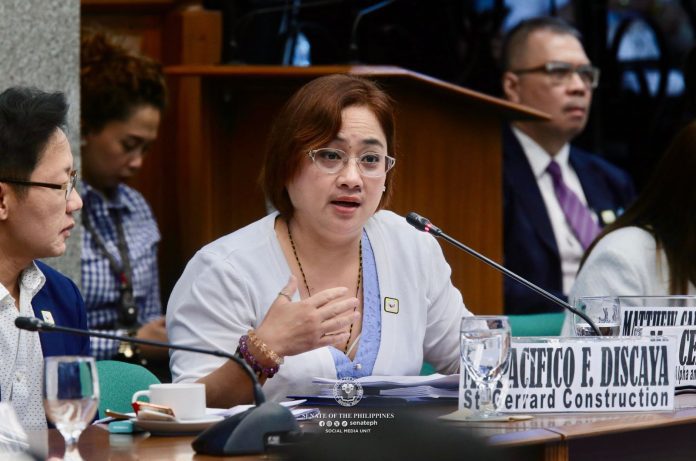
The case isn’t about rhetoric—it’s about receipts. In a Cebu courtroom on January 13, 2026, businesswoman Sarah Discaya pleaded not guilty to graft and malversation charges linked to an alleged ₱96.5-million flood-control project in Davao Occidental that investigators say was funded as if completed, despite claims it was only partially done or not implemented at all. Her plea was entered during arraignment at RTC Branch 27 in Lapu-Lapu City, formally pushing the dispute into the trial track.
This is not a one-person docket. Discaya stood in arraignment alongside Maria Roma Rimando, identified as president of St. Timothy Construction (a firm linked to Discaya), and eight officials from the Department of Public Works and Highways (DPWH) who are also charged. All accused entered pleas denying the allegations—setting up a case that will hinge on individual roles, approvals, and the chain of responsibility behind project processing and fund releases.
Prosecutors allege the core mechanism was paper-driven: documents were processed and payments released in a manner that treated the project as properly carried out, resulting in the alleged misuse of ₱96.5 million in public funds. The accusation is conspiratorial in structure—respondents are accused of acting together to approve, fund, and release payments for the questioned project—raising the central question this trial will eventually answer: what was built, what was certified, and what was paid anyway?
The court has scheduled pre-trial on February 3, when disputed issues will be narrowed and evidence formally marked—where the fight moves from statements to records. Sunday Punch reads it as a straight Knock-Out test: if the project was delivered as claimed, the documentation should withstand scrutiny; if it wasn’t, the paper trail becomes the story. Either way, this is now positioned as one of the high-profile cases tied to alleged irregularities in government infrastructure spending.
Image from Senate of the PH FB