
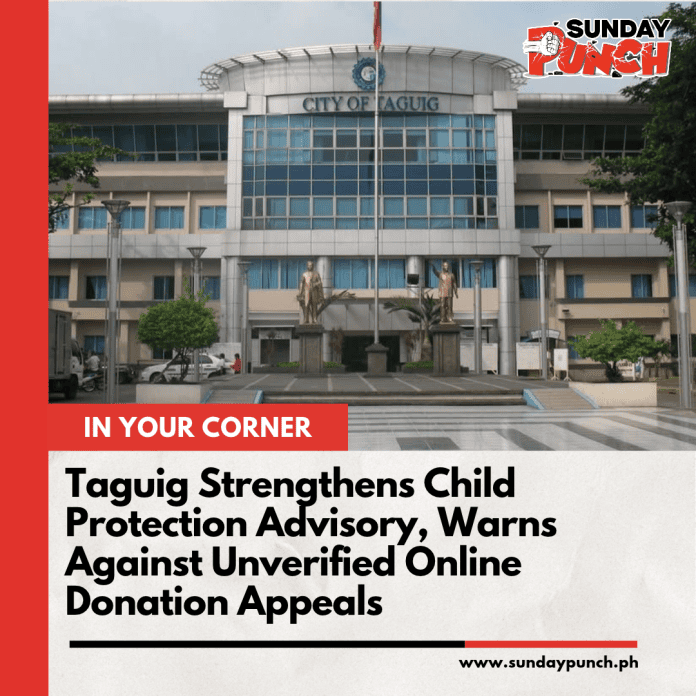
The Taguig City Government has warned residents against individuals soliciting money or donations by claiming to represent children under protective custody, clarifying that no private individual has been authorized to collect financial assistance on behalf of the City Social Welfare and Development Office (CSWDO). In its public advisory, the office emphasized that requests for cash, transportation fares, or other financial support made through personal social media accounts, private messages, and unofficial channels should not be mistaken for legitimate government solicitations. The warning aims to protect both concerned citizens from potentially misleading appeals and vulnerable children whose circumstances may be used to attract donations without authorization.
The CSWDO explained that assistance for children under its care or supervision is managed through established social welfare procedures, ensuring that their needs are addressed through appropriate institutional channels. The office also stressed the importance of protecting children’s privacy, dignity, and confidentiality, particularly when personal information, photographs, videos, or details of their protective custody are circulated online. While public generosity plays an important role in helping vulnerable communities, the city urged residents to verify fundraising appeals before providing assistance, especially those involving minors whose identities and circumstances require additional protection.
Residents who encounter suspicious requests are encouraged to report them directly to the CSWDO-Taguig official Facebook page, contact the office through (02) 7795-8825 or 0932-272-4888, or visit the RPAPA Building at Taguig City Hall for verification and assistance. By directing donations and inquiries through authorized channels, the Taguig City Government seeks to prevent the misuse of children’s circumstances while ensuring that genuine welfare concerns receive proper attention. The advisory reinforces the city’s commitment to safeguarding children in protective custody and reminding the public that meaningful assistance begins with responsible, verified action.