
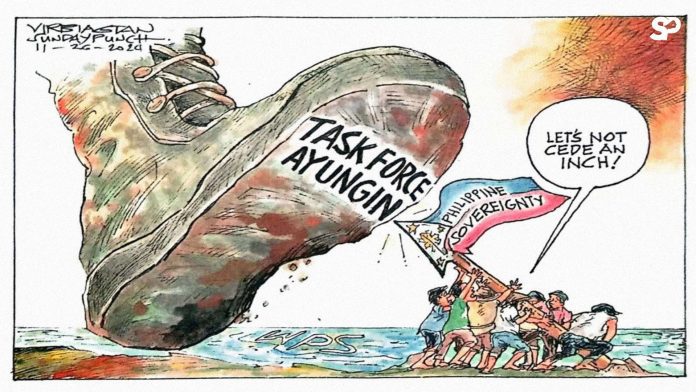
Illustration by: Virgilio Biagtan
As tensions in the South China Sea escalate, the presence of the US Task Force Ayungin in support of Philippine maritime operations raises important questions about the balance between strategic alliances and sovereignty. While American assistance through intelligence, surveillance, and reconnaissance bolsters our capabilities against China’s incursions, the involvement of foreign troops—even in a “supporting role”—must be carefully scrutinized. Sovereignty is not divisible; asserting it in the face of one power while ceding portions of it to another sets a dangerous precedent.
The Philippines must tread carefully in managing its partnerships. While the United States has been a long-standing ally, collaboration should not come at the cost of full control over our operations. National interest must remain at the core of all agreements. Just as we rightly resist China’s expansionist activities, we must ensure that partnerships with the United States do not infringe on our autonomy. Sovereignty is not merely a concept to defend in the West Philippine Sea—it is the very principle that must guide our foreign policy and military strategies in all directions.