
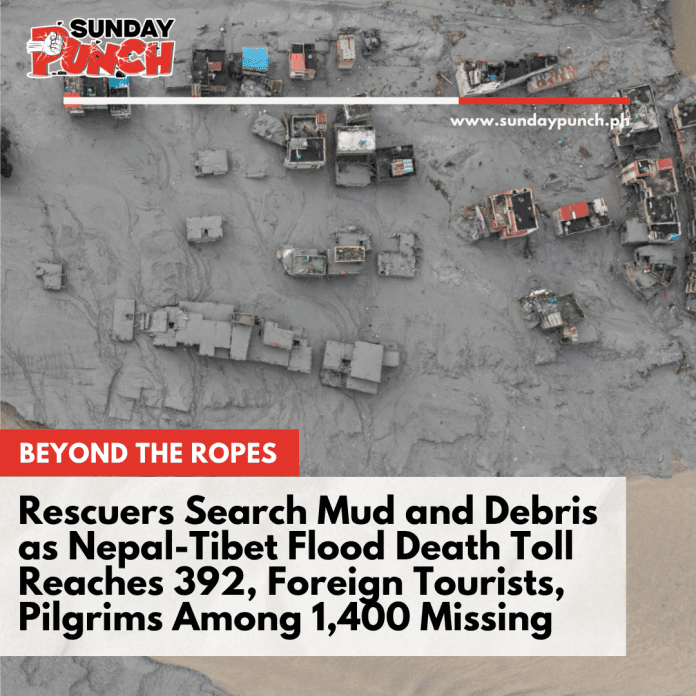
Rescue teams are digging through mud, rubble, and collapsed communities along the Nepal-Tibet border after catastrophic flash floods and landslides left at least 392 people dead and more than 1,400 others missing.
The disaster struck a region used by residents, workers, tourists, and pilgrims, including travelers headed toward Mount Kailash, one of the most sacred pilgrimage sites in Asia. With roads blocked, villages buried, and waterways choked by debris, authorities are racing against time to locate survivors and recover those still unaccounted for.
Several reports point to a possible glacial collapse as the trigger behind the massive debris flow, sending water, ice, mud, and rock crashing downstream with little warning. Experts also warned that blocked rivers and unstable waterways could create new flood risks if trapped water suddenly breaks through.
The scale of destruction has made rescue work extremely difficult. Landslides have cut off access routes, floodwaters have damaged infrastructure, and thick layers of mud continue to slow search operations in areas where entire sections of communities were reportedly swept away.
For families waiting for news, the disaster is no longer only a rescue operation — it is a long and painful search for answers. The rising death toll and the number of missing show how quickly mountain communities can be overwhelmed when extreme weather, unstable slopes, and glacier hazards collide.
Image from Prabin Ranabhat ( thejakartapost.com )