
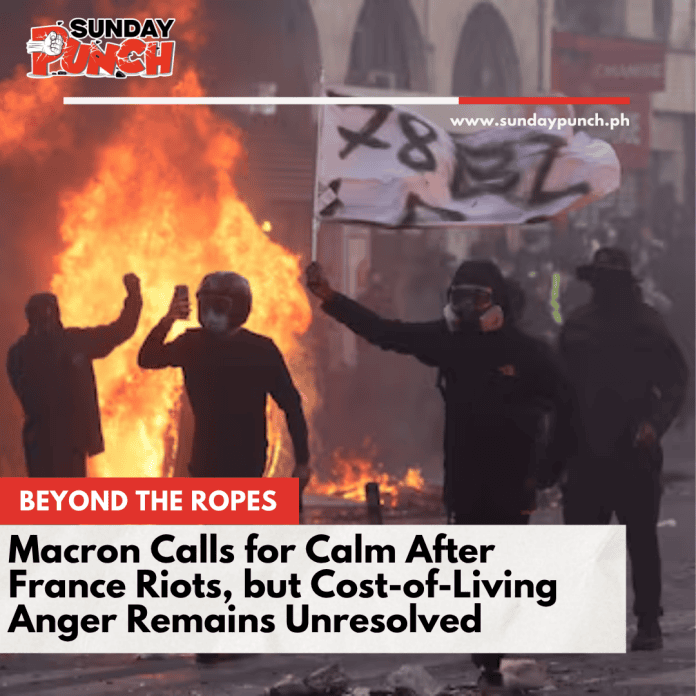
French President Emmanuel Macron is calling for calm after nationwide demonstrations descended into rioting and looting, but restoring order on the streets may prove easier than resolving the frustrations that brought hundreds of thousands of people there in the first place. Around 550,000 demonstrators took part in protests across France on October 17, according to authorities, with organizers estimating participation at approximately 800,000. What began as demonstrations over deteriorating school conditions, rising fuel prices, and the cost of living escalated into some of the country’s worst urban unrest in years. The violence has drawn widespread condemnation, but the scale of participation raises a separate question: even after the damaged streets are cleared, what happens to the grievances of those who marched peacefully?
According to Reuters and Agence France-Presse, nearly 2,400 people were arrested following violent incidents across Paris, Marseille, Limoges, and other cities, while French authorities reported almost 1,000 injured police officers and gendarmes. Businesses were looted, vehicles burned, and public buildings attacked, including the historic town hall in Limoges. In a televised address on October 18, Macron condemned the destruction and promised accountability for those responsible while distinguishing violent offenders from demonstrators expressing legitimate concerns. His government also ordered a review of police preparedness and pledged further measures to restore security. The destruction has imposed additional costs on communities already confronting economic difficulties, illustrating the contradiction of damaging local businesses and public facilities during demonstrations partly motivated by financial hardship.
Yet the unrest did not emerge from dissatisfaction with a single government decision. Reporting by The Guardian and Associated Press traces the demonstrations to weeks of student-led protests against teacher shortages, deteriorating educational facilities, and concerns about policing, which subsequently converged with broader anger over fuel prices, wages, and public services. The movement reflects frustration among different groups whose concerns extend beyond immediate street violence. Macron’s administration has announced plans for discussions involving students, teachers, unions, business representatives, and lawmakers, but the effectiveness of those discussions will depend on whether they produce concrete responses. Calling for national unity may be politically necessary; convincing families struggling with household expenses that their concerns are being addressed requires considerably more than a well-delivered speech.
The crisis also presents a challenge for those participating in peaceful demonstrations. When public attention shifts toward burning vehicles, injured officers, and damaged landmarks, the original demands risk being overshadowed by the conduct of individuals involved in violence. French authorities have blamed radical groups and opportunistic criminals for much of the destruction, although the responsibility of individuals remains subject to investigation and legal proceedings. At the same time, reports of injuries involving demonstrators and criticism of police crowd-control methods have intensified calls for scrutiny of law enforcement responses. Public safety and the right to peaceful assembly are not competing principles; both require protection. The irony is that a movement demanding better public services may now find its message competing with headlines about the public infrastructure destroyed during the unrest.
With France approaching its 2027 presidential election, the demonstrations have become another major test of public confidence in Macron’s administration. The government faces the immediate responsibility of protecting communities, investigating violence, and addressing damage, while also confronting the longer-term economic and institutional concerns expressed by protesters. None of these grievances justifies looting or attacks on people and property, but condemning criminal acts does not settle the policy questions that preceded them. The greater challenge is ensuring that restoring calm does not become a substitute for addressing public discontent. France can repair shattered storefronts and reopen damaged streets, but rebuilding public trust may demand a far more complicated reconstruction.
Image from CBC News