
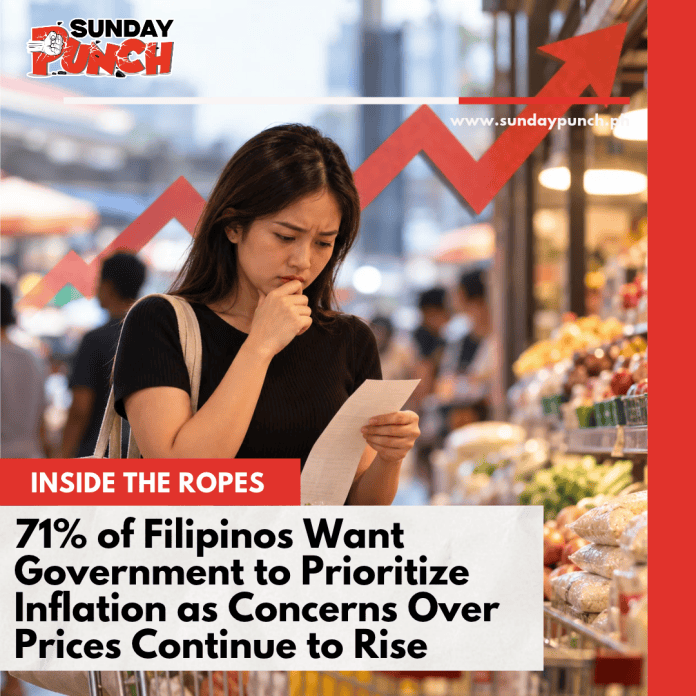
Rising prices remain the biggest concern for Filipinos, with 71% identifying inflation control as an urgent national priority, according to the September 2026 Pulse Asia survey. The findings reflect mounting pressure on households as the cost of food, transportation, utilities, and other basic necessities continues to weigh on everyday spending.
The demand for action has grown significantly. Public concern over inflation climbed 14 percentage points from the previous survey and 17 points compared with the same period last year. The increase suggests that the rising cost of living is becoming an even more pressing issue for families, despite continuing government efforts to manage economic conditions.
Beyond inflation, Filipinos also identified fighting corruption (39%) and increasing workers’ wages (36%) among the country’s most urgent concerns. Together, the results highlight a broader frustration over purchasing power, income security, and public accountability. For workers whose salaries struggle to keep pace with expenses, economic improvement means little if it cannot be felt in their monthly budgets.
The survey also revealed contrasting views of government performance. While 52% expressed appreciation for efforts to protect overseas Filipino workers, dissatisfaction was particularly high in areas directly affecting household finances. Half of respondents disapproved of the government’s performance in reducing taxes (50%), while 49% expressed disapproval over efforts to raise wages and another 49% over measures addressing involuntary hunger.
The results present a clear challenge for policymakers. Filipinos are not simply asking for stronger economic figures or assurances that conditions will improve. They want meaningful relief from rising expenses, better-paying jobs, and stronger action against corruption. With inflation continuing to dominate public concern, the government’s economic performance is increasingly being judged by what ordinary families can actually afford.