
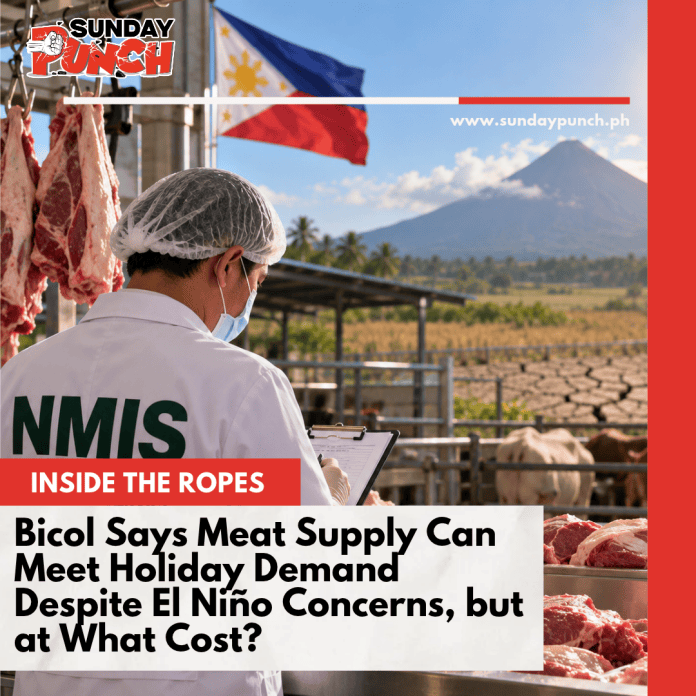
El Niño may be threatening agricultural production across the Philippines, but in Bicol, officials say the holiday meat supply is holding its ground. The National Meat Inspection Service (NMIS) has assured consumers that meat availability in the region remains stable despite concerns surrounding the ongoing climate phenomenon. Yet behind the reassurance lies a larger question: how long can food supply systems withstand increasingly difficult climate conditions before the effects become impossible to ignore at the dinner table?
During a media forum in Legazpi City on October 15, NMIS Bicol Regional Technical Director Dr. Alex Templonuevo reported that slaughterhouse operations were increasing, indicating sufficient meat supply as the Christmas season approaches. The agency monitors slaughter activities through daily and monthly reports submitted to the Department of Agriculture (DA), while continuing inspections to ensure meat entering the market meets safety standards. The DA, meanwhile, is responsible for implementing measures to mitigate El Niño’s potential effects on livestock production.
The assurance comes as PAGASA warns that a strong to very strong El Niño is present in the tropical Pacific, with conditions expected to persist into the first half of 2027. The phenomenon increases the likelihood of below-normal rainfall, dry spells, and drought in vulnerable areas, potentially putting pressure on water availability, agricultural production, and livestock management. While the immediate meat supply in Bicol appears stable, the longer-term concern is whether producers can continue meeting demand if unfavorable conditions persist. Apparently, even Christmas dinner now requires keeping an eye on the climate forecast.
However, sufficient supply does not necessarily guarantee affordable prices. Although NMIS has reported increasing slaughterhouse activity, the announcement did not establish whether consumers should expect stable meat prices throughout the holiday season. Climate-related pressures can affect production costs, particularly when water availability and animal feed become more difficult to manage. For households preparing their Christmas budgets, the distinction matters: knowing there will be meat in the market is reassuring, but knowing whether it will remain affordable is another question entirely.
For now, Bicol’s meat supply outlook offers some welcome reassurance ahead of the holidays, but El Niño remains a challenge that extends well beyond December. The situation underscores the importance of climate resilience in agriculture, particularly as the country faces the possibility of prolonged dry conditions into 2027. Keeping meat available through the Christmas rush is one achievement; protecting livestock production and consumer affordability through months of climate uncertainty is the more demanding test. After all, Noche Buena should be a celebration of abundance, not an annual examination of how much the food system can endure.