
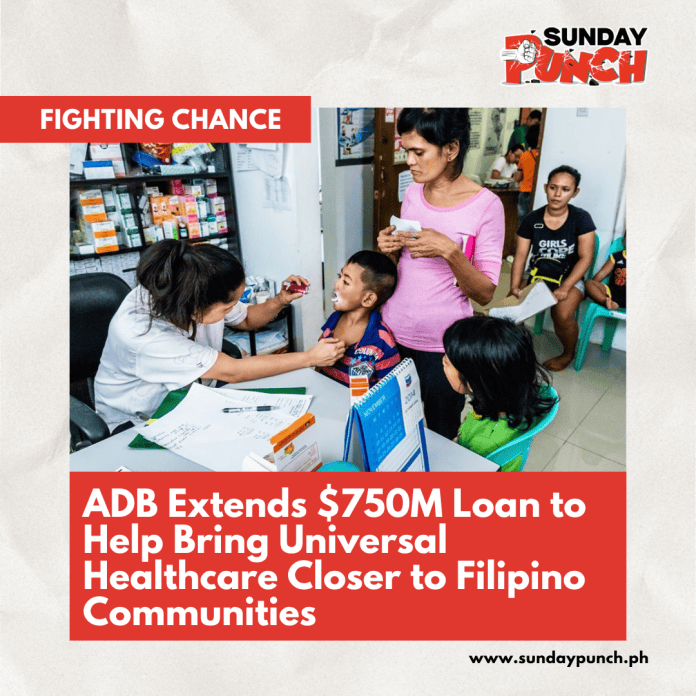
The Asian Development Bank is providing a $750-million loan to help the Philippines expand its Universal Health Care program, giving the government additional support to widen access to medical services at a time when rising costs continue to strain Filipino families.
The financing will support Subprogram 3 of the Build Universal Health Care Program, which focuses on strengthening the country’s health system and improving access to quality care, especially for underserved communities. The ADB said the amount was increased by $250 million after oil price and supply shocks created larger financing needs for the government.
The program supports universal enrollment in PhilHealth and the expansion of benefit packages covering primary care, emergency services, and additional medicines. It also includes efforts to increase no-copayment beds in public and private facilities, a crucial step for patients who delay treatment because they fear the bill more than the illness.
Beyond hospitals, the support is also meant to reach communities that are often left waiting. Mobile health units, emergency medical assistance teams, and community health teams under PuroKalusugan are being deployed to underserved areas, bringing services closer to residents who may not have easy access to clinics or specialists.
The Japan International Cooperation Agency is also providing about $188 million in parallel cofinancing, higher than its original $130-million allocation. Together, the assistance is meant to strengthen a health system that must now respond not only to everyday medical needs, but also to the impact of economic shocks, extreme weather, and other crises that hit the poor first and hardest.
For ordinary Filipinos, the promise of universal healthcare is simple: fewer families forced to choose between medicine and meals, fewer patients turned away by cost, and more communities reached before health problems become emergencies. The challenge now is execution — making sure the funding translates into real services, real medicines, and real protection for the people who need them most.
Image from WHO