
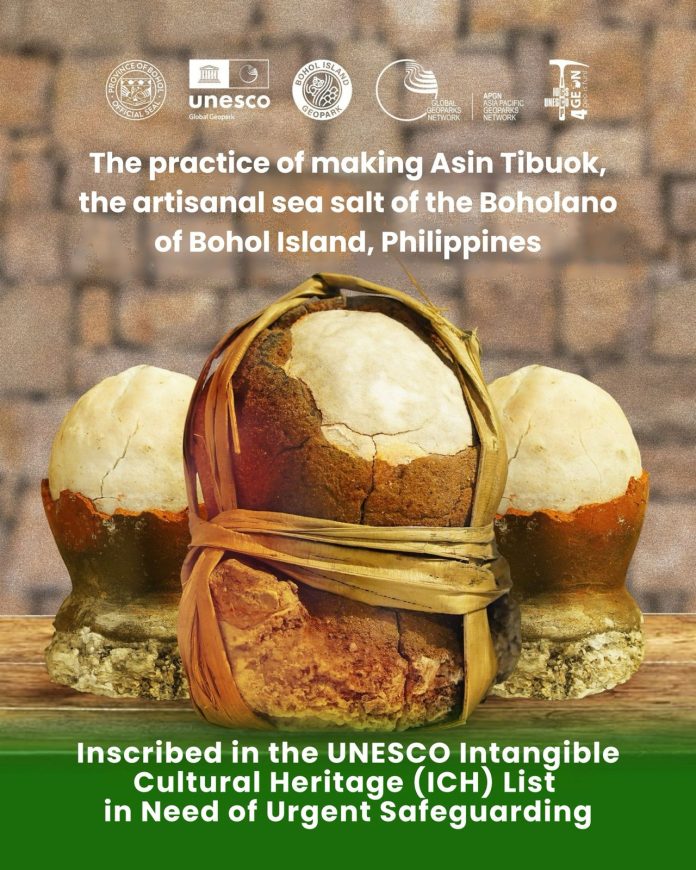
Bohol’s centuries-old tradition of crafting asin tibuok—the smoky, rock-shaped sea salt fondly called the “dinosaur egg”—has officially entered the global spotlight. UNESCO has added the craft to its Intangible Cultural Heritage list in urgent need of safeguarding, marking a historic win not just for Bohol but for Filipino food heritage at large. The announcement came from New Delhi during the 20th session of UNESCO’s heritage committee, sealing international recognition for a tradition long kept alive by only a handful of families.
The craft behind asin tibuok is a slow, punishing dance with the sea: filtering ocean water through burned coconut husks, boiling the brine for hours in clay pots, and coaxing out the iconic dome of salt whose flavor chefs describe as smoky, earthy, and unlike anything else on the planet. For generations, it survived quietly in Alburquerque, Bohol—kept alive by artisans whose work rarely left local markets, let alone reached the global stage.
Heritage advocates have been sounding the alarm for years as younger Boholanos moved away from salt-making, leaving the tradition close to extinction. UNESCO’s inscription is a lifeline, reminding the country that asin tibuok isn’t just an ingredient—it’s a cultural lineage. Gov. Erico Aristotle Aumentado said the recognition should energize Boholanos to protect the craft from disappearing, calling it a treasure forged by “immense sacrifice and hard work.”
Interestingly, while the number of practitioners has dwindled, modern culinary interest has exploded. Restaurants in Manila and Cebu are shaving asin tibuok over steaks, seafood, and heirloom dishes, while tourists treat it less like pantry salt and more like an artifact. For the families of Alburquerque—members of the Kapunungan sa Mang-Asinay—the listing signals a rare second wind: protection, recognition, and perhaps a new generation ready to take up the clay pot.
Image from Bohol Island Geopark FB