
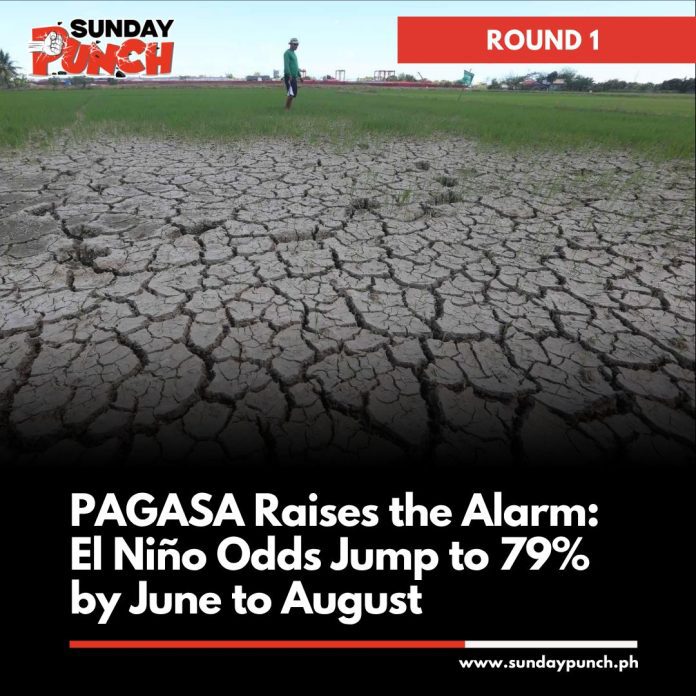
PAGASA just upgraded the country from El Niño “Watch” to “Alert” on April 22, after forecasting a sharper chance that El Niño forms during the June–July–August season. The agency now places the probability at 79%—up from the 55% threshold that triggered the earlier Watch on March 25. Translation: the atmosphere isn’t just flirting with El Niño anymore—conditions are lining up, and the window is the next 2–3 months.
PAGASA’s warning isn’t abstract. If El Niño develops, the country could see below-normal rainfall in several areas, and that hits real life fast: water supply, agriculture, energy, and day-to-day public welfare. The agency flagged the usual El Niño pattern—dry spells and possible drought in some regions—while also stressing that the habagat season can still bring heavy rains in other parts of the country. In short: the country can be dealing with dryness and flooding risks in different places at the same time.
Behind the shift to Alert is what PAGASA is seeing in the Pacific: sustained ocean surface warming in the east-central equatorial Pacific for the past two months. Their current outlook: El Niño may begin as weak, but models suggest it could reach moderate to strong intensity, and may persist until at least the first quarter of 2027. PAGASA’s categories are based on sea surface temperature anomalies: weak (0.5–0.9°C), moderate (1.0–1.4°C), strong (1.5–1.9°C), very strong (2.0°C+). They also clarified: “super El Niño” isn’t an official PAGASA category.
One pressure point PAGASA highlighted is Angat Dam, Metro Manila’s main domestic water source. Their hydrologists warned the dam could follow a familiar pattern seen in the 2023–2024 El Niño, where the deeper impacts showed more clearly the following year—especially if rainfall in the watershed stays weak during amihan. Meanwhile, their rainfall outlook from May to October shows a messy picture: parts of western Luzon may run below normal early (May), habagat could boost rains in western sections by June–August, then by October PAGASA sees a 60%+ probability of below-normal rainfall across most of the country as El Niño effects potentially strengthen.
Image from Mark Balmores | MB